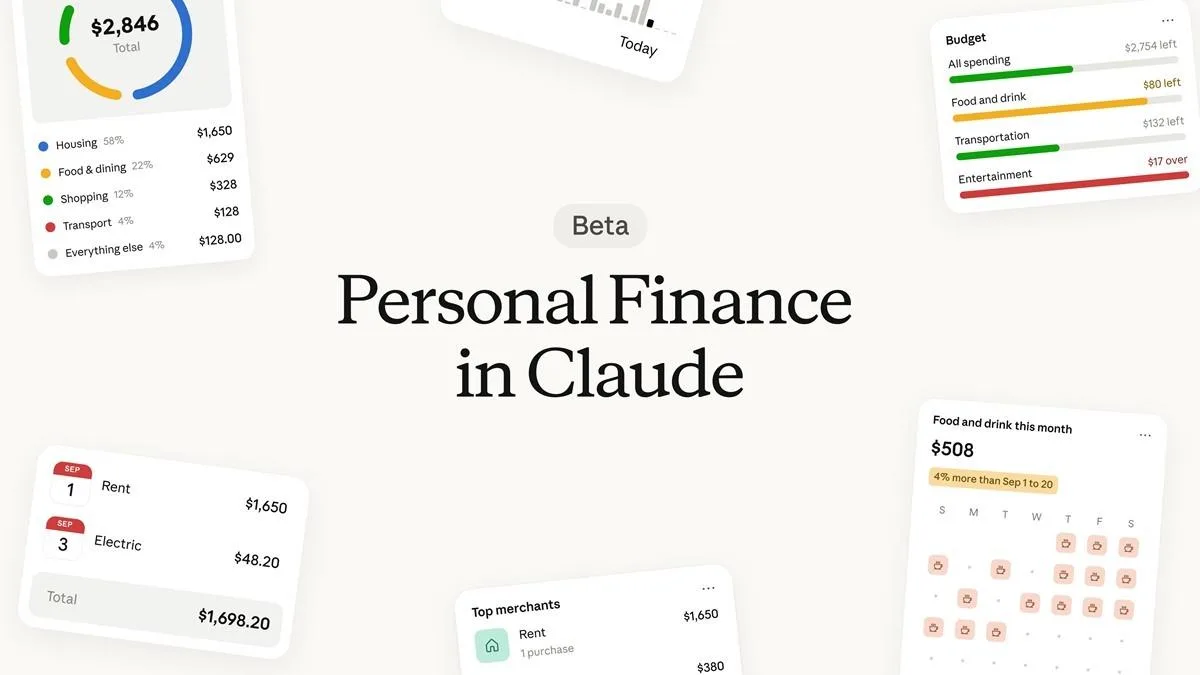

AI assistants are no longer limited to answering questions. Anthropic has announced a new "Personal Finance" feature for its popular chatbot Claude, allowing users to track their budget directly inside the app.
With the update, Claude goes beyond offering generic financial advice and becomes a personal financial advisor that interprets a user's real spending data.
Bank accounts connect securely
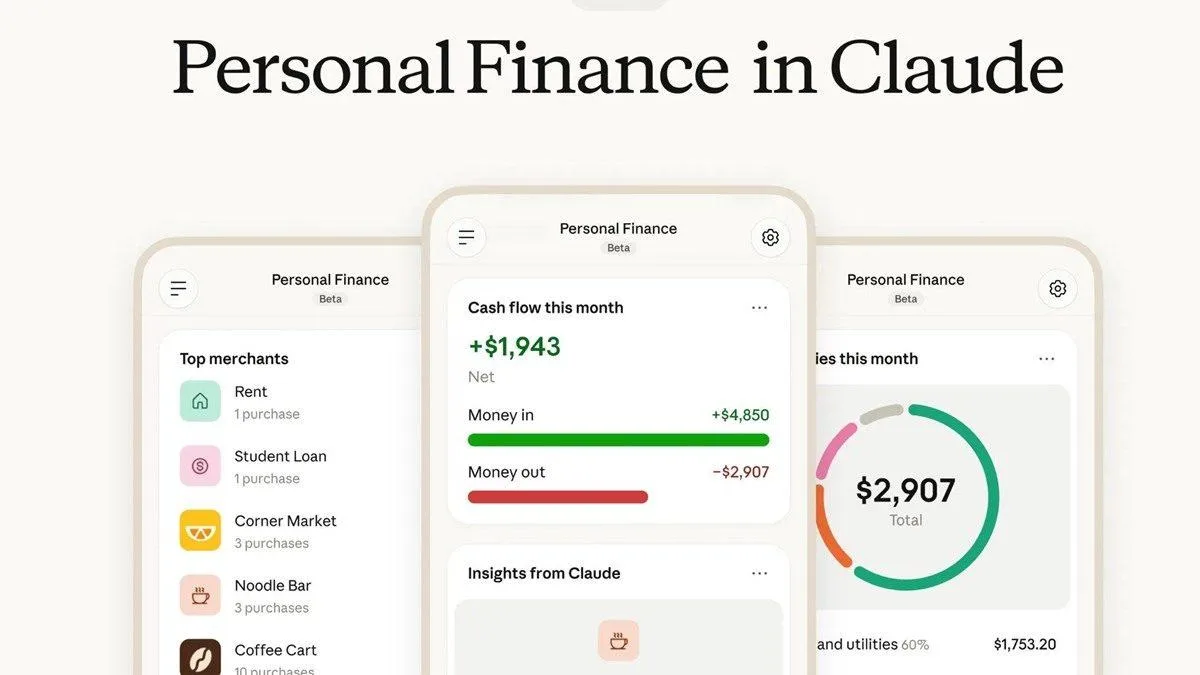
The new tool lets users link bank and credit card accounts to Claude through the Plaid infrastructure. Anthropic stresses that access is strictly "read-only": the tool cannot transfer money, manage budgets or make investment decisions.
Users can ask Claude questions directly about their account balances and transaction history. The company also says the tool contains no ads or sponsored content and does not promote products such as credit cards or loans, meaning its answers remain neutral.
The move strengthens Anthropic's position against OpenAI, whose ChatGPT announced similar personal finance features back in May.
Turning spending into plain language
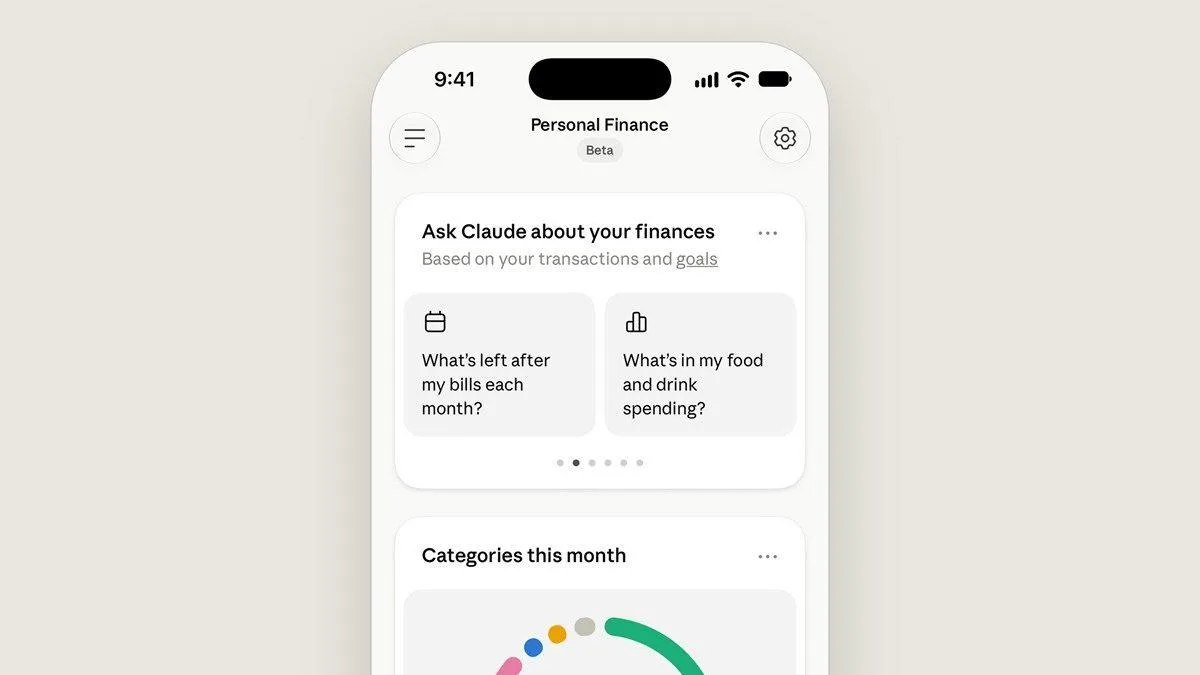
The Personal Finance tool translates complex financial data into simple conversational language. At the end of the month, a user asking "Where did my money go this month?" receives a summary in which Claude sorts spending across all linked accounts into categories such as rent, bills, dining and shopping.
The system can also answer follow-up questions like "Is this spending higher than usual?" and flag unexpected bank fees or steadily rising subscription charges.
From interest calculations to income-vs-expense analysis
The tool can also analyze whether users are spending more than they earn. Claude explains financial terms such as annual percentage rate (APR) and can calculate the total amount of interest paid over the past year.
With this, Claude becomes a fresh example of just how far conversational AI tools can go in personal finance management.






Comments (0)
No comments yet. Be the first!