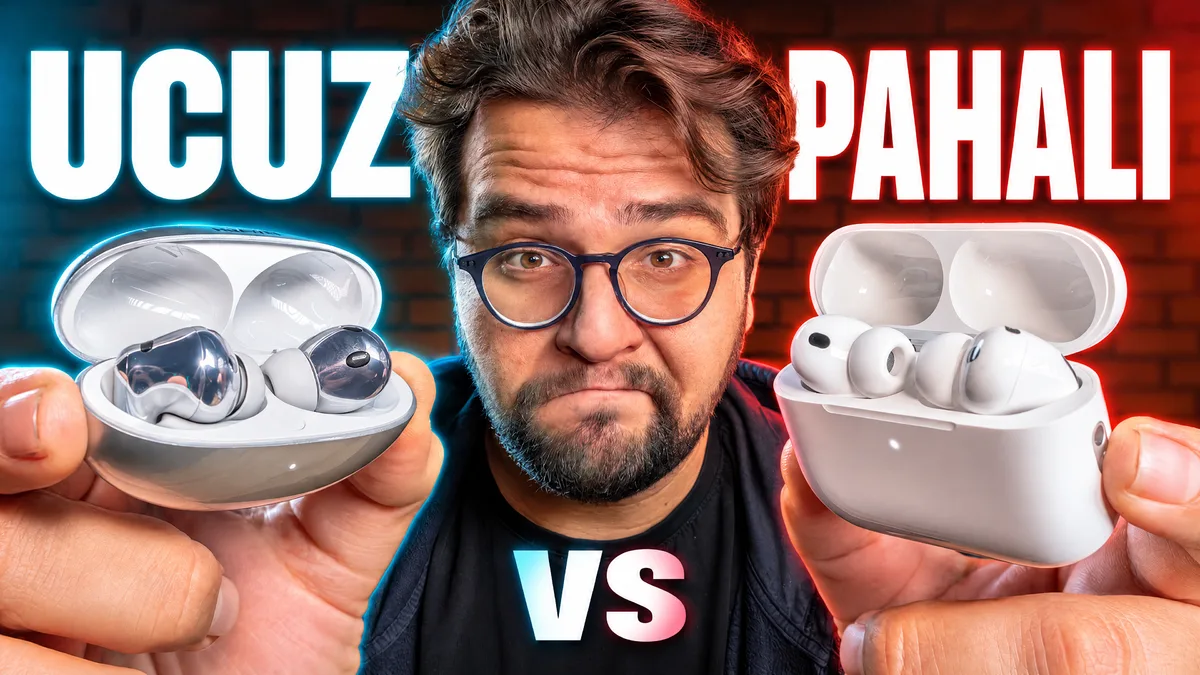

On one side sits the Huawei FreeBuds Neo, sold in the 7,000 TL band in Turkey; on the other, the Apple AirPods Pro 3 at around 17,500 TL. That's a price gap of roughly 2.5 times. But does that difference actually translate into better sound, comfort and features? We put both models through their paces, category by category.
How We Set Up the Test
We deliberately ran our tests on an iPhone, because the AirPods Pro 3 can only show off their full capabilities inside the Apple ecosystem. That also gave us a chance to put Huawei's claim of an equal experience across HarmonyOS, Android and iOS to the test — on Apple's home turf.
Design and Everyday Comfort
The two models differ noticeably in case size, weight and how they sit in the ear during daily use. On the durability front, the FreeBuds Neo carries an IP55 rating, while the AirPods Pro 3 is certified IP57. Those figures make a practical difference in workout and urban commuting scenarios.
Sound Technology and Ecosystem Fit
Huawei's side features an 11 mm Turbo dynamic driver, while Apple leans on its H2 chip-based driver architecture. Frequency response ranges, Hi-Res Audio and HWA certification, and personalized spatial audio performance are among the most critical points of separation between the two.
The platform picture is interesting too: data transfer speeds and equalizer flexibility can deliver different results on iOS, Android and HarmonyOS. The FreeBuds Neo draws a more flexible profile across multiple platforms, while the AirPods Pro 3 only unlocks their full potential on Apple devices.
Active Noise Cancellation and Microphone Performance
We tested adaptive ANC and transparency modes in real-world scenarios on the metro and in city traffic. On the microphone side, we ran voice recording tests in different noise environments; the results clearly diverged in crowded settings.
Battery Life and Charging
Wired and wireless charging options, charging times and total usage time rounded out the comparison. For anyone weighing value for money, the differences on the battery front can be decisive.
Which earbuds do you think make more sense? Share your thoughts in the comments.


Comments (0)
No comments yet. Be the first!