

AI summaries have already reshaped how people use Google Search, and now the same technology is knocking on YouTube's door. The platform has started a test designed to give users direct answers without ever opening a video. The convenience, however, could come at a cost for content creators: lost views.
The company is preparing to bring "Ask YouTube," a feature it already offers on mobile, to desktop search results. Users included in the test will see an AI-generated summary box above the classic list of videos when they search. The move signals YouTube's ambition to evolve from a video archive into an interactive answer engine.
How will it work?
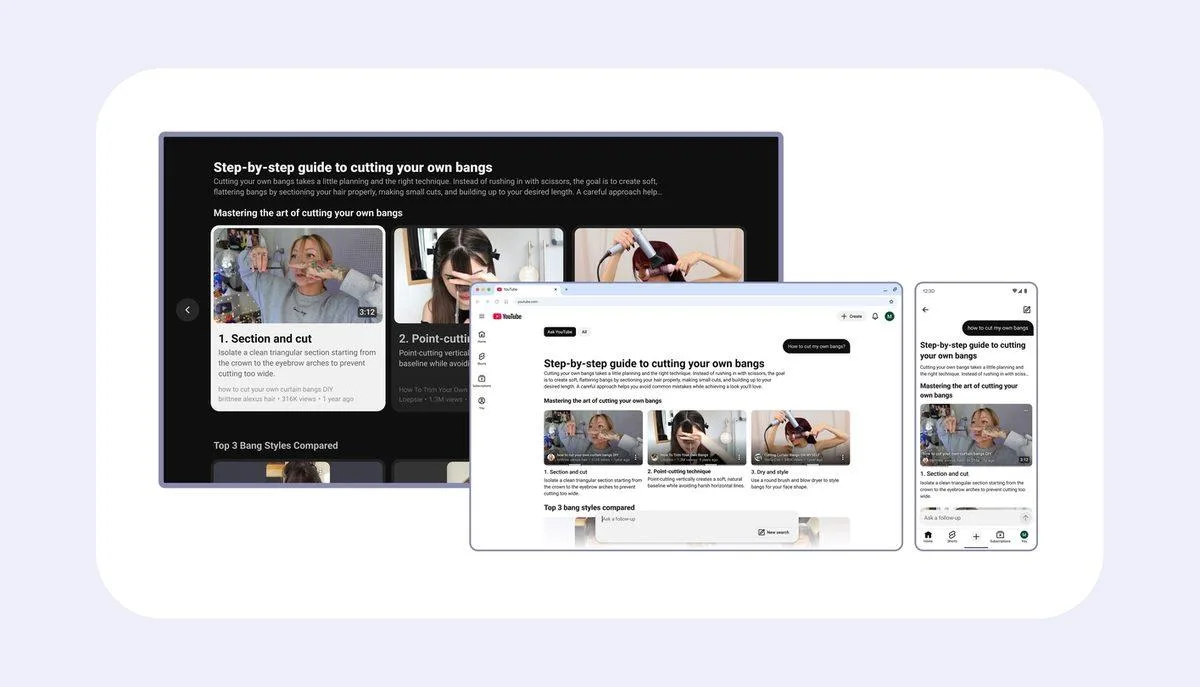
For now, the feature is limited to a small audience: some signed-in desktop users in the United States searching in English. The test kicks in mainly for "how-to" style queries. When someone searches, for example, how to remove stains from a painted wall, a comprehensive AI summary appears at the top of the screen instead of the usual video list.
These summaries aren't text-only. They come with timestamped highlights automatically pulled from relevant videos, letting users jump straight to key moments. Users can tap "Show more" to read the full answer, ask follow-up questions, or simply scroll past the box to reach the familiar video list.
What's the risk for creators?

From a viewer's perspective, getting to the answer without sitting through a 15-minute tutorial video is undeniably appealing. But a similar scenario has played out before: when Google Search added its "AI Overviews" feature, organic traffic to websites dropped significantly, leaving publishers who produce guide-style content in a tough spot.
There are fears the same pattern could repeat for videos. If users get their answer directly on the search page, click-through rates to videos may decline. More importantly, YouTube has offered no explanation of any compensation or revenue model for creators whose content gets summarized and watched less.
For now, the feature remains in testing with a narrow group of users, and whether it will roll out more widely is still unclear.





Comments (0)
No comments yet. Be the first!