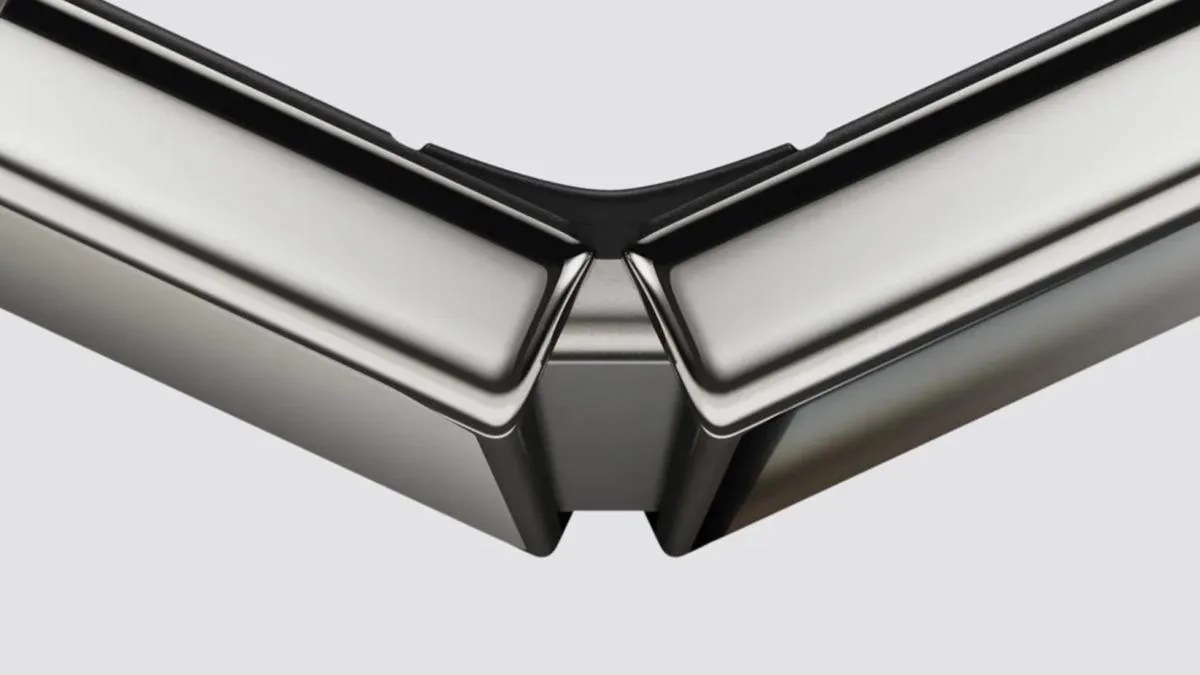

Building a foldable phone is a fundamentally different engineering problem from building a conventional one. Fold the device in half and its thickness doubles, making it far harder to get heat out of the chassis. Apple's answer was to turn the hinge mechanism itself into a channel that carries heat.
A bespoke A20 Pro for the Duo

Dan Murray, Apple's Vice President of Silicon Engineering, and Banafsheh Barabadi, Senior Director of Thermal Product Design, laid out the chip's architecture and cooling strategy in comments to PCMag. The A20 Pro, manufactured on a 2 nm process, powers both the iPhone 18 Pro series and the iPhone Duo, Apple's first foldable iPhone.
The Duo's variant differs from the A20 Pro used in other models in small but significant ways. According to Murray, the chip carries a second display engine so the inner and outer screens can run simultaneously and without interruption. The architecture was also adjusted to support an under-display FaceTime camera embedded in the inner panel.
Metal over foam: bridging the chip and the vapor chamber

To keep the chip's heat in check, Apple built a vapor chamber from scratch along with a new interface material. The "metal over foam" structure, also visible in iFixit's teardown images, plays a critical role by filling the gap between the processor and the vapor chamber.
Barabadi said the material provides both a thermal and a mechanical connection directly between the processor and the vapor chamber. After months of development, the team arrived at a structure that delivers flexibility and high heat conduction at the same time.
The hinge that shares heat between both halves
The hardest step came from the constraints of the foldable body itself. Apple's engineers devised a flexible graphite pipe that runs through the hinge, making heat transfer between the device's two halves possible.
Developed jointly by the thermal and mechanical teams, the structure is designed to retain both its conductivity and its integrity through thousands of folding cycles. Heat is therefore spread across both bodies rather than pooling in one half, significantly enlarging the device's total heat-dissipation surface.






Comments (0)
No comments yet. Be the first!