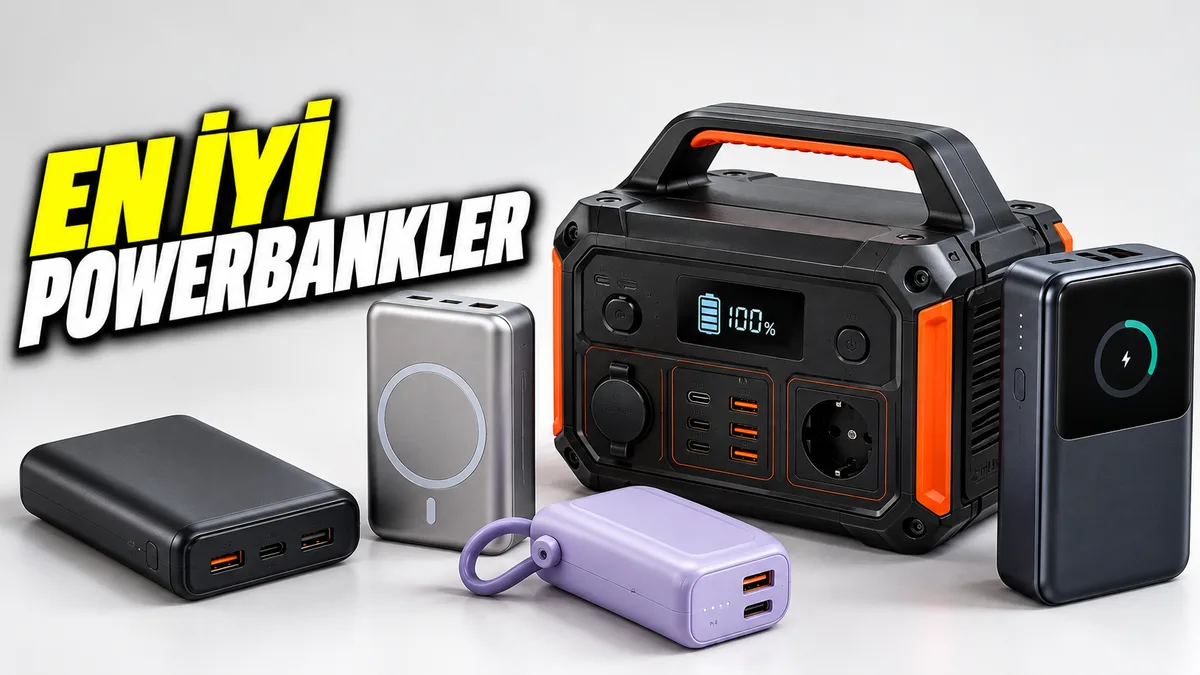

A phone that dies halfway through the day, or the need to charge several devices at once, is reason enough to keep a power bank in your bag. In 2026, names like Anker, Xiaomi, UGREEN, Baseus and Belkin dominate the field — but deciding based on the mAh figure alone can be misleading. Charging power, compatibility and portability all shape the choice just as much.
This guide covers both the selection criteria and the standout models for every budget, along with price comparisons.
What Actually Determines Charging Speed?
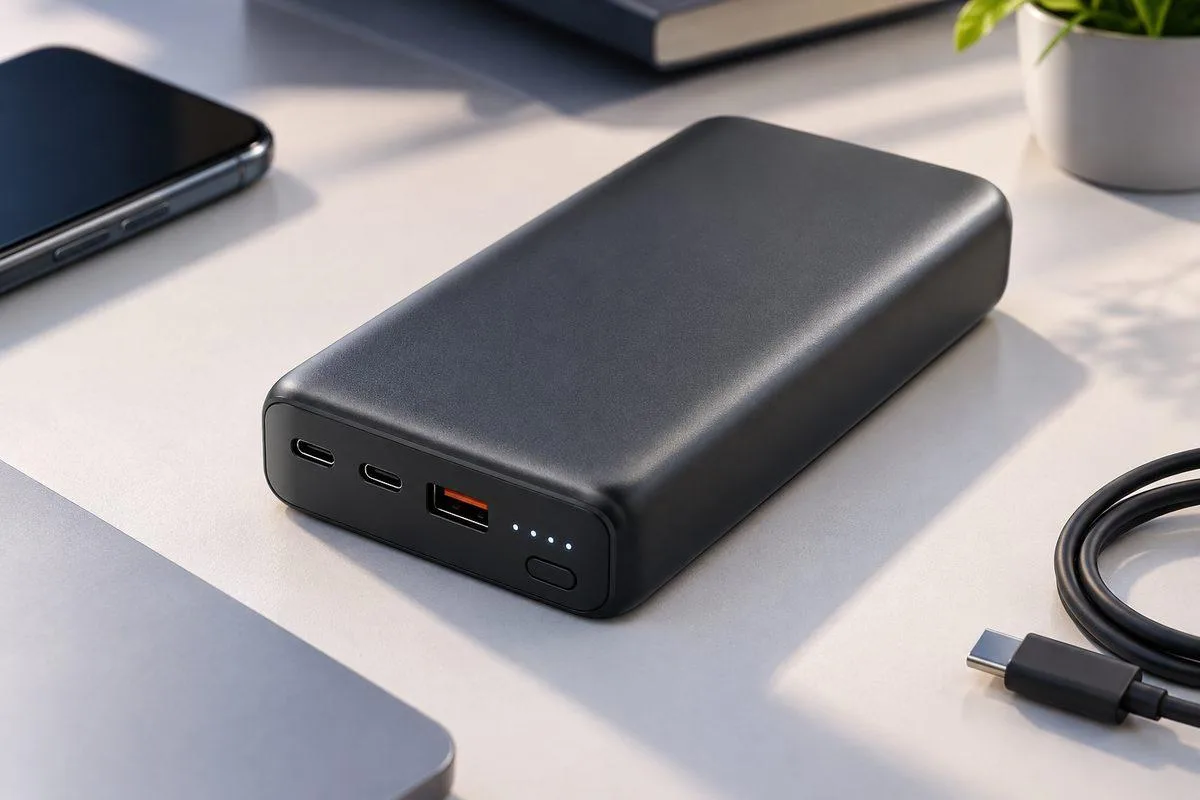
When browsing in a store, capacity is usually the first number people look at — yet mAh only tells you how much energy is stored. Charging speed is dictated by the wattage. On top of that, which charging technology your phone or laptop supports is a decisive factor too.
Wattage and the Role of USB PD
Watts (W) measure electrical power, and on compatible devices a higher output means shorter charging times. But there's a catch: a power bank with a 100 W output cannot charge a phone limited to 25 W at that power. USB Power Delivery (USB PD) is one of the standards that governs power transfer between compatible devices. PPS support, seen on some phones and laptops, can make power adjustment even more flexible.
Conversion Efficiency: How Much of That 10,000 mAh Do You Actually Get?
A common misconception is that a 10,000 mAh power bank will fully charge a phone with a 4,000 mAh battery exactly 2.5 times. Lithium cells operate at 3.7V; the energy is converted to 5V at the USB output (or higher voltages during fast charging), and some of it is lost along the way to heat and resistance.
Quality models on the market achieve a conversion efficiency of roughly 60% to 75%. In other words, a 10,000 mAh battery, once losses are factored in, delivers around 6,000–7,000 mAh of net energy to your phone.
The Wh Rule for Air Travel
When flying, look at watt-hours (Wh) rather than mAh — aviation regulations measure energy capacity in this unit. Portable lithium batteries under 100 Wh can generally be carried in cabin baggage, subject to aviation rules and the airline's own conditions. It's worth checking current operating rules and the airline's practices before you travel.
These approximate conversions can help:
| Battery capacity | Approx. energy at 3.7 V |
|---|---|
| 10,000 mAh | 37 Wh |
| 20,000 mAh | 74 Wh |
| 25,000 mAh | 92.5 Wh |
| 30,000 mAh | 111 Wh |
The Standout Models of 2026, by Use Case
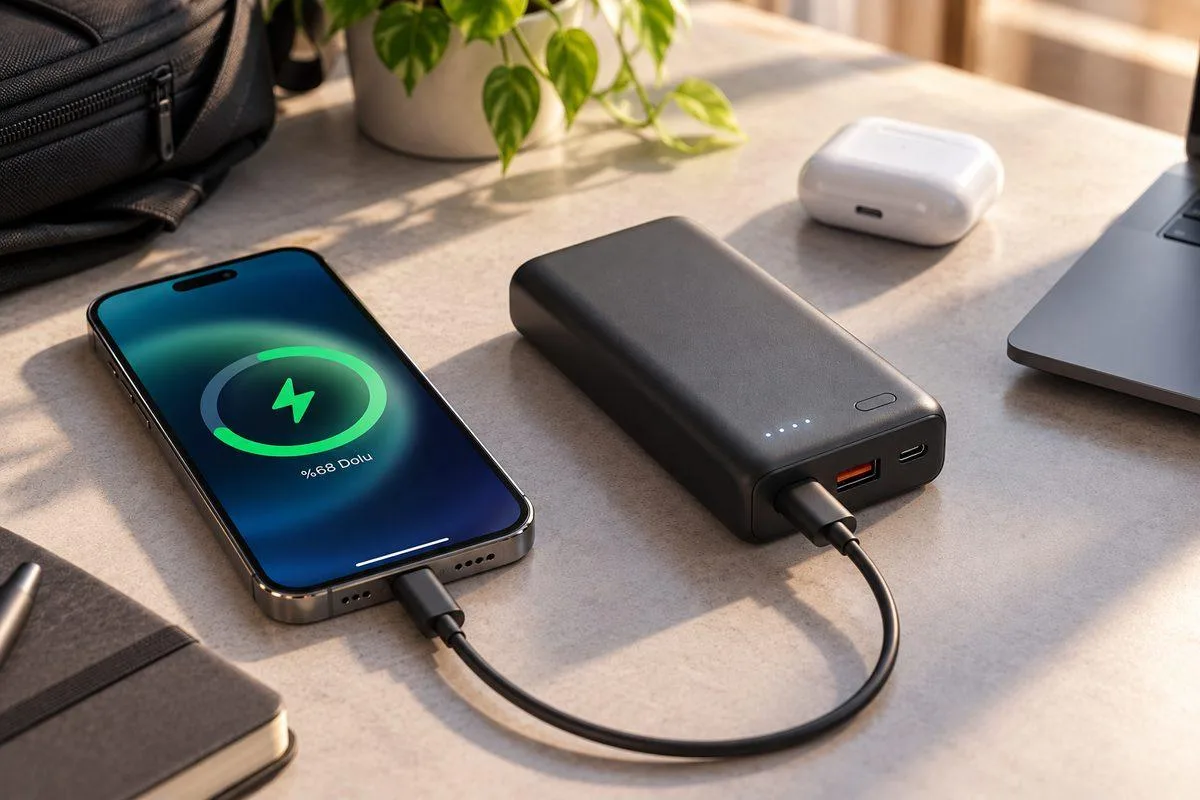
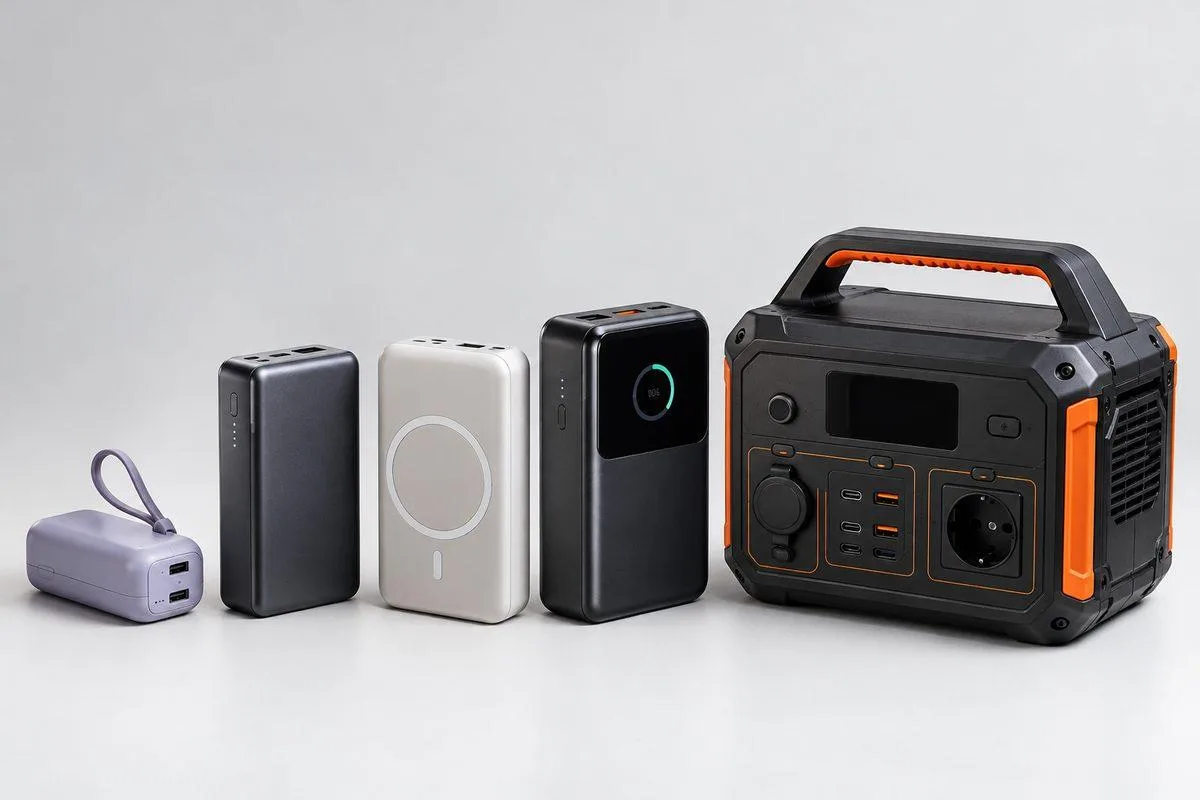
Not all power banks deliver the same power, so choosing based on your needs is essential. Someone who just wants one top-up during the day doesn't need more than a compact 10,000 mAh unit; anyone running multiple devices or wanting to power a laptop away from an outlet should look at higher capacity and output.
Compact Picks for Phones
For everyday use, compact models in the 10,000 mAh range are sufficient. With two outputs and a strong price-to-performance balance, the Xiaomi Mi 22.5W Fast Charge Powerbank 3 is a popular name in this segment. The Spigen EA2210 Slim, with its thin body and aluminum casing, slips easily into a pocket and supports fast charging via Quantum Boost technology. The Bix PB106, nearly credit-card sized and lightweight, stands out as a frequent choice for minimalist users.
High-Power Options That Can Charge a Laptop
Those who need to run a laptop away from a wall socket should turn to high-wattage models. The Ugreen Nexode 145W / 25,000 mAh can charge a laptop and a phone at high speed simultaneously thanks to its powerful output ports. The Baseus Free2Pull 65W and EnerFill FC31 45W also offer laptop-capable power while standing out with their compact bodies.
Camping and Long Trips Demand Capacity
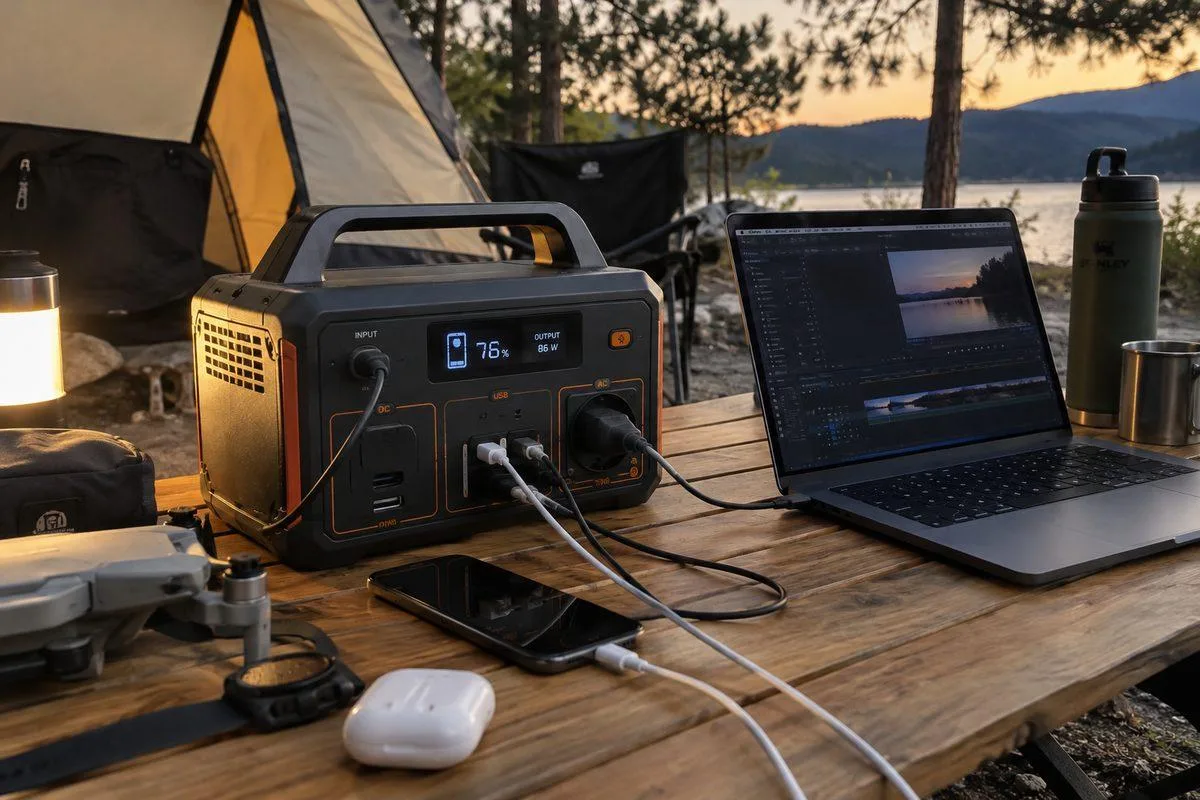
In places without electricity access or on long journeys, capacities of 20,000 mAh and above are recommended. With multiple output ports and a rugged body, the Baseus Bipow series (20,000 mAh – 30,000 mAh) can keep several devices running for days. The Xiaomi Redmi 20,000 mAh is a common pick for those who want high capacity without straining their budget.
Magnetic and Wireless Solutions
For anyone tired of cable clutter, magnetic models are a practical lifesaver. The Baseus PicoGo Qi2 / EnerFill FM series snaps magnetically to the back of your phone and offers the convenience of wireless use. The Verbatim Charge 'n' Go distinguishes itself with its light build and a strong magnetic grip that doesn't let go while you're on the move.
Technical Comparison: Ports, Displays and Battery Chemistry
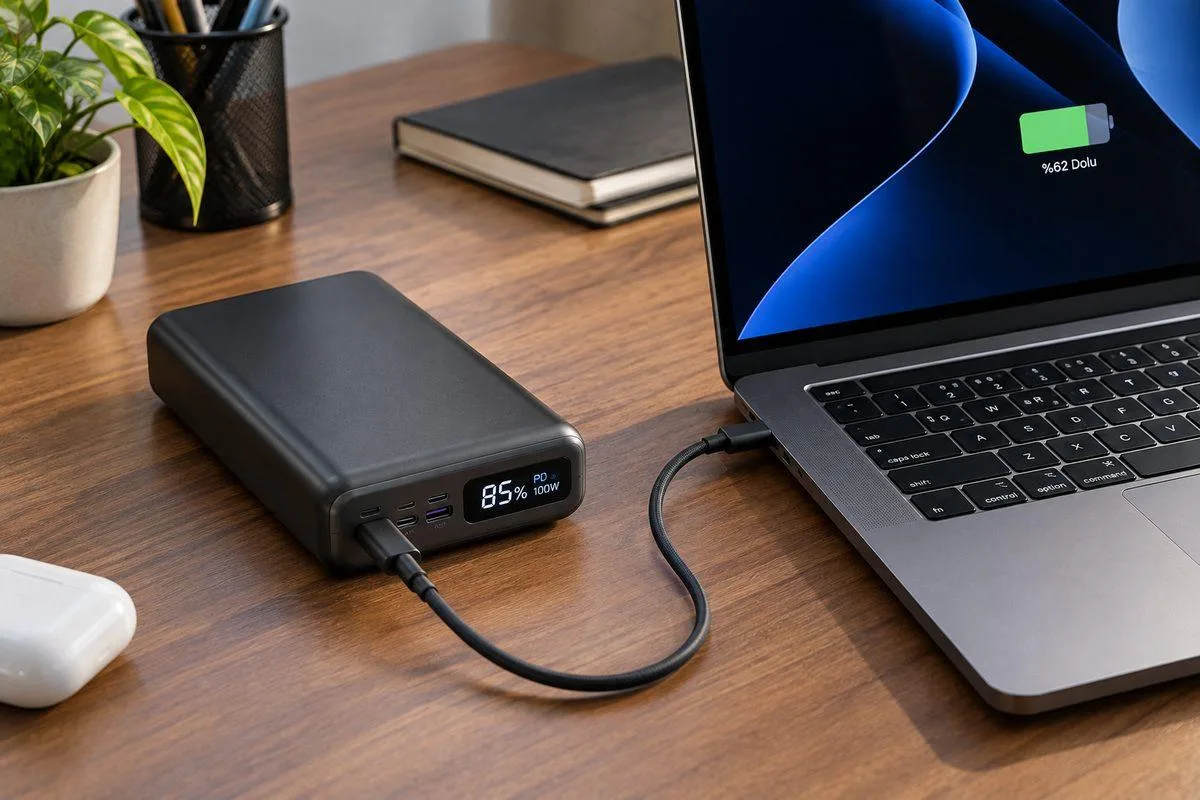
When evaluating brands, you need to weigh capacity, maximum output, port count, wireless charging support and safety features together. A high wattage figure on one model doesn't mean it leads in every other respect.
| Brand – Model | Capacity | Max output | Standout feature |
|---|---|---|---|
| Xiaomi Mi 22.5W | 10,000 mAh | 22.5W | Broad compatibility, price-performance |
| Baseus EnerFill FC31 | 10,000 mAh | 45W | Digital display, built-in cable |
| Ugreen Nexode | 20,000 – 25,000 mAh | 65W – 145W | Top-tier laptop support, smart display |
| Spigen Slim | 10,000 mAh | 22.5W | Premium slim-case design |
What Happens When You Connect Multiple Devices?
Most units carry multiple USB-A and USB-C ports, but once you plug in a second or third phone, the total power is split between the ports. A 22.5W model sharing power between two phones may slow down its fast charging. Higher-end Ugreen and Baseus products use intelligent power distribution to try to deliver adequate current from every port.
How Reliable Are Digital Displays?
Older four-LED indicators show charge level only in rough 25% increments, while newer digital displays show the exact percentage — and sometimes even the current wattage draw. According to user experiences, these displays are far more precise and reliable than classic LEDs when it comes to planning remaining energy.
Li-ion or Li-Po?
Li-ion (lithium-ion): Usually built as cylindrical cells. Costs are low, but they're physically heavier and cell performance can degrade over time.
Li-Po (lithium-polymer): Can be produced in thin, flexible forms, making it the backbone of slim designs. Somewhat better resistance to heat and wider safety margins, though it costs slightly more than Li-ion.
What Do Users Say?
Reviews reveal the details that never show up in spec tables: how much room a unit takes in a bag, whether it heats up while charging, and whether it hits the expected speeds on different phones.
Do the Promised Speeds Materialize?
According to posts on shopping sites and tech forums, quality brands largely deliver their advertised fast-charging figures when paired with suitable cables. The most common mistake is opting for a cheap, poor-quality cable: connect an old, thin cable to a 100W-capable device and the current drops, stretching out charge times.
How Many Cycles Before They Wear Out?
Per user reports, quality products with lithium-polymer cells show a noticeable performance drop after an average of 300–500 full charge cycles. A device drained and recharged fully every day can fall to about 80% of its original capacity after roughly 1.5–2 years.
Size Advice from Frequent Travelers
The shared advice from heavy travelers: stay within the 10,000–20,000 mAh range, both to avoid flight restrictions and to spare your shoulders. Overly heavy models can become uncomfortable to carry daily after a while.
2026 Price Tiers: Options for Every Budget
Under 1,000 TL
In this range you'll mostly find basic 10,000 mAh models with outputs between 10W and 22.5W — suitable for daily emergencies and single top-ups. S-Link or entry-level Xiaomi alternatives can appear in this band. (Prices are in Turkey; 1,000 TL is roughly $25–30 at recent rates.)
The 1,000–2,500 TL Band
This is where demand is heaviest. 20,000 mAh capacities, digital displays, fast-charging protocols and sometimes basic wireless/magnetic features all sit in this price range. Popular fast-charging models from Baseus and Xiaomi live here.
Premium Picks Above 2,500 TL
Laptop-capable outputs between 45W and 145W, smart color displays and top-tier build quality mark this category. The Ugreen Nexode and the advanced Baseus EnerFill series are here, favored by professionals and tech enthusiasts.
Frequently Asked Technical Questions
Some of the questions buyers planning a serious purchase most often ask — and the answers:
Which Is the Best Brand of 2026?
There's no single "best," because user expectations differ. If safety and cell quality come first, Anker and Ugreen stand out; when it comes to price-performance and availability, Xiaomi and Baseus share the lead.
Does Leaving It Plugged In Overnight Cause Harm?
Most modern models carry smart protection chips that prevent overcharging, short circuits and excessive heat; the unit cuts the current itself once full. Still, to preserve battery health, it's recommended not to leave it plugged in for days after it's fully charged.
How Many Years Does One Last?
Depending on typical usage conditions and quality, a power bank can be used without major issues for 2 to 4 years while largely retaining its battery health.



Comments (0)
No comments yet. Be the first!