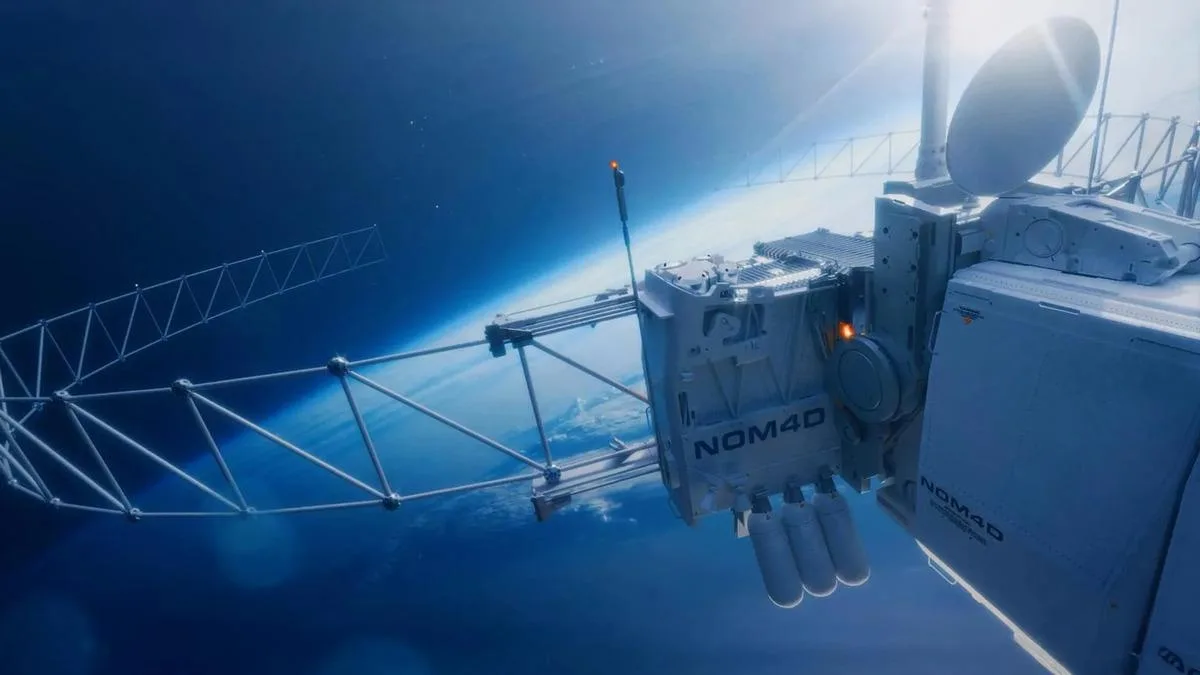

Biggest enemy of any structure headed to space: cramped interior of launch vehicle. Caltech engineers, with DARPA backing, flipped rule with ASTRA. Instead of launching finished structure, robot assembled parts in orbit — first robot ever to complete assembly no human touched.
ASTRA reached orbit March 2026. Robot joined carbon fiber tubes with aluminum connectors, building own truss hundreds of kilometers up. Real significance lies ahead: path toward building communication antennas, giant telescopes, solar power stations directly in orbit.
Launch bay no longer dictates design
Big antenna and telescope projects hit first constraint at drawing board. Teams fold structures to fit rocket interior; structure unfolds in orbit, ready for duty.
ASTRA method needs only components fit inside. Lift capacity still limit — but final structure can end up many times larger than launch vehicle bay.
Robot arm plus dispensers at work
System has two main parts: dispensers feeding parts in sequence, robot arm processing them. Arm picks carbon fiber tubes one by one, joins them with aluminum connectors. Tubes merge, load-bearing skeleton of reflective antenna takes shape step by step.
Truss: think frame of connected tubes. Composition includes Kapton film for flexibility, stays light without sacrificing strength.
Next stop: kilometer-scale facilities
First orbital assembly proves approach works in field. Goal ahead: robots building far larger antennas, radio telescopes, solar panels. Long term, space facilities spanning kilometers on scenario list.
Comments (0)
No comments yet. Be the first!