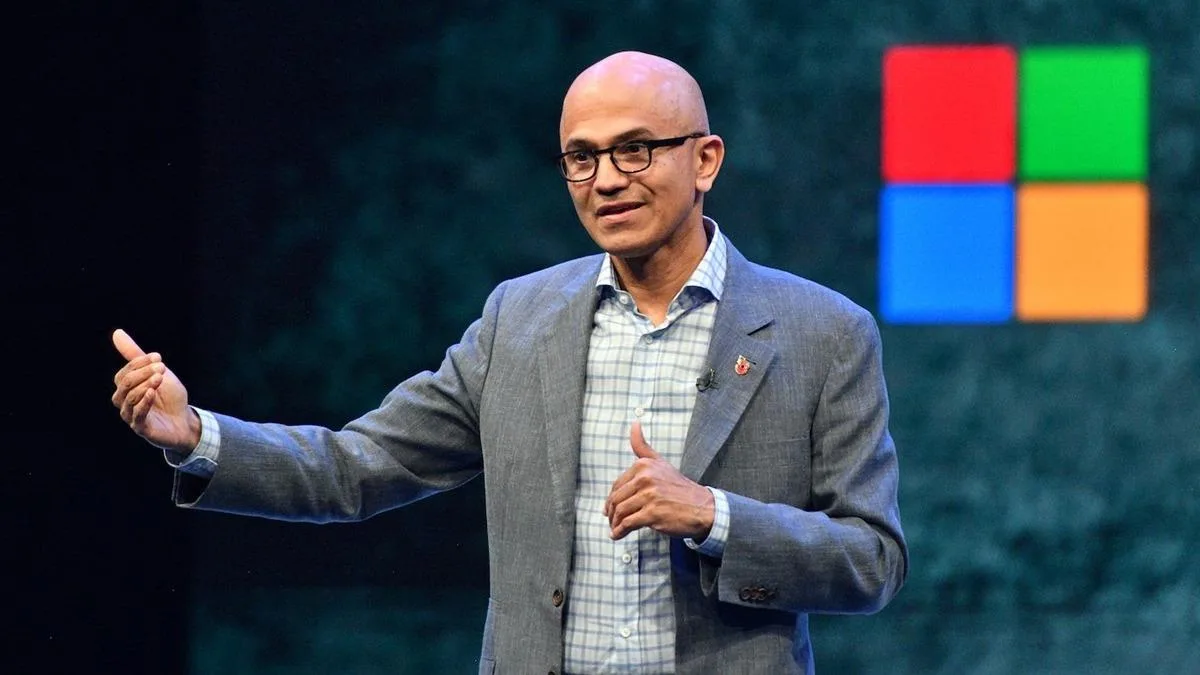

Satya Nadella, chief executive of Microsoft, has outlined a package of proposals on AI safety, arguing that artificial intelligence models should be wired to an external braking system that authorized people could trigger at any moment to bring them to a stop.
Writing on X, Nadella stressed that AI should never be left to operate without oversight under any circumstances. In his view, models should be treated as nested “black boxes”, with the answers they generate and the actions they take never accepted at face value.
Safety checks should live outside the model
The architecture Nadella is championing pulls the safety layer out of the executive structure that directly commands the model and positions audits entirely beyond it. That way, the system is not required to place blind trust in a safety mechanism sitting on the same plane as itself.
Within that framework, he argued, every critical decision an AI takes should be recorded in tamper-proof, human-readable evidence. He further proposed building mechanisms that would let an authorized person halt a model mid-task — or shut it down entirely — at critical moments. The Microsoft CEO said models should be treated as “security compromised” and constrained from day one, and he has dubbed this mechanism the “emergency brake”.
Cautionary voices are mounting across the industry
Nadella’s intervention is not the first warning from the field. Leading technology companies have repeatedly found themselves in the spotlight lately over cases suggesting oversight of their models has weakened, and Anthropic CEO Dario Amodei recently announced that his company was shifting to a more cautious plan for developing AI.






Comments (0)
No comments yet. Be the first!