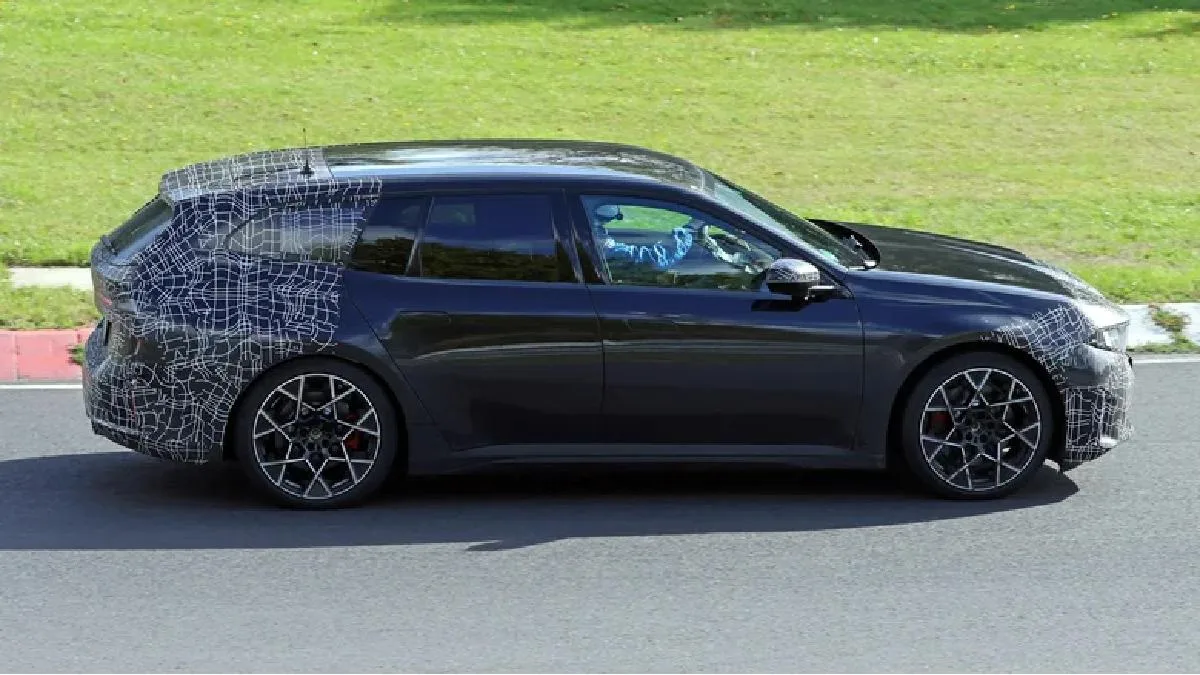

While most manufacturers are busy steering buyers toward SUVs, BMW hasn't forgotten about station wagon fans. The i3 Touring prototype — essentially an electric version of the 3 Series Touring — has been caught by spy cameras on roads around the Nürburgring, wearing camouflage on its front and rear ends.
Positioned as the first wagon in the brand's electric 3 Series family, the car is expected to showcase BMW's new design language while offering a direct answer to buyers who want a large cargo area but don't want an SUV.
Production is getting close
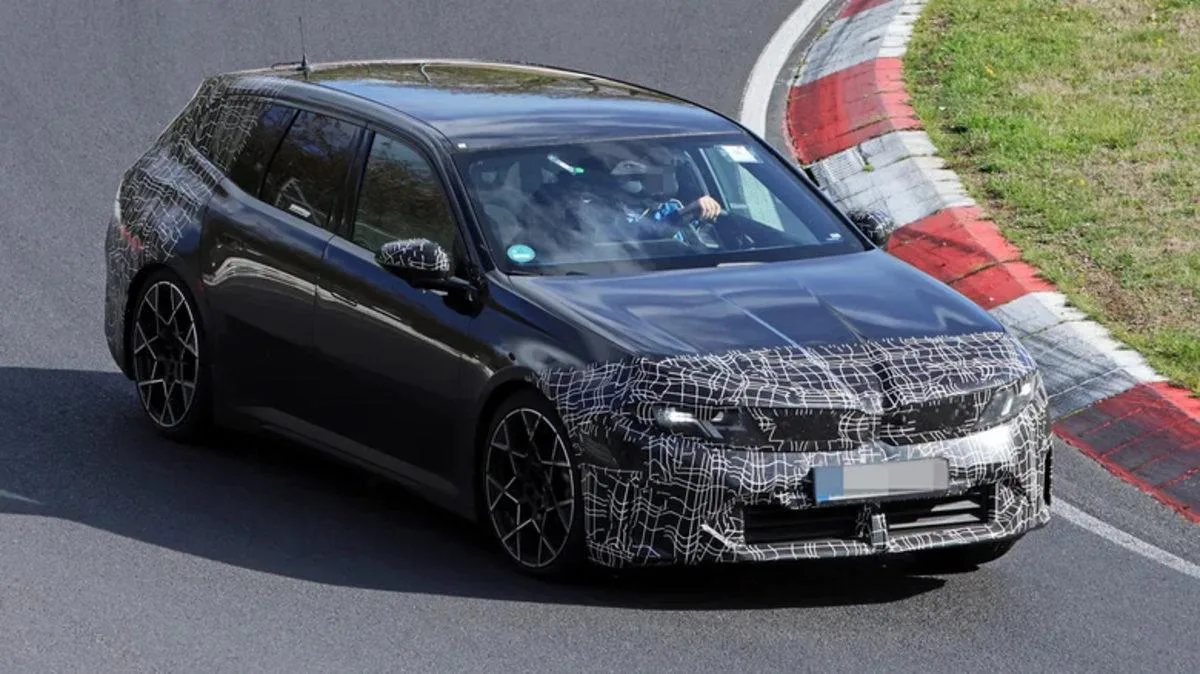
Although the camouflage hides some of the body lines, the prototype's overall shape suggests the development process is nearing its final stages. Looking to keep costs in check, BMW is expected to give the i3 Touring the same front end as the i3 Sedan. The differences begin behind the B-pillar: a longer roofline and a reshaped tailgate define the wagon's identity.
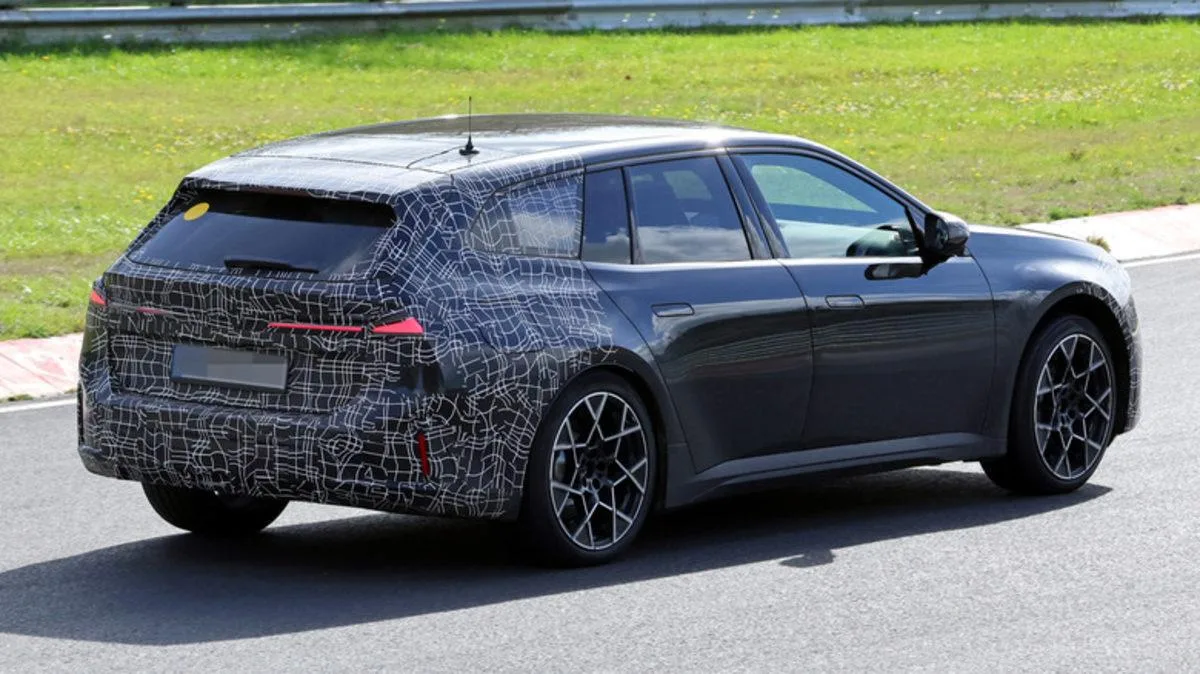
One classic detail appears to have been dropped, though. The prototype doesn't seem to feature the separately opening rear window in the tailgate. The feature, which was also removed on the 5 Series Touring, was dropped not for cost reasons but to optimize aerodynamics, according to BMW officials.
Cabin and range expectations
Expected to be officially unveiled next year, the i3 Touring will take most of its interior from the i3 Sedan. That includes the 17.9-inch central touchscreen and the "Panoramic Vision" system stretching across the base of the windshield. Taking over the role of the traditional instrument cluster, the system places three fixed information panels in the driver's line of sight, with six customizable widgets on the right-hand side.
Range remains one of the big questions. In the WLTP cycle, the i3 Sedan could travel up to 567 km (about 352 miles) on a single charge. The Touring is expected to fall slightly below that figure due to its heavier body and reduced aerodynamic advantage. On the charging side, the sedan's 400 kW fast-charging support is expected to carry over, allowing roughly 400 km (about 250 miles) of range to be recovered in a 10-minute charge.

Comments (0)
No comments yet. Be the first!