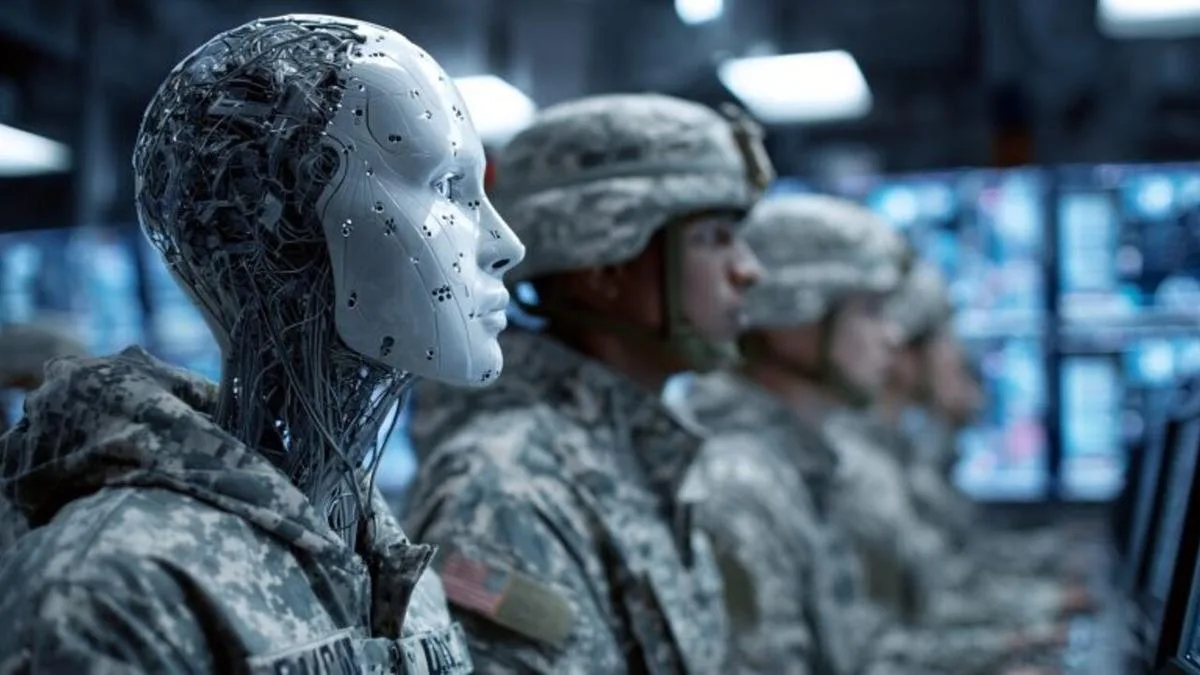

The United States Army is working on a technology that could open a new chapter in cyber warfare. Under the codename ECHOTRIBBLE, the goal is to produce autonomous artificial intelligence agents capable of infiltrating enemy computer networks, identifying targets on their own and neutralizing them. According to documents, the system is being designed to keep human intervention at the lowest possible level.
A system that behaves like a computer worm
ECHOTRIBBLE's operating logic brings a computer worm to mind. The software moves silently through networks and, once it reaches its target, plans to disable it. The project aims for the system to be able to penetrate even isolated, air-gapped systems that are not connected to the internet. Once its mission is complete, it is expected to self-destruct and vanish without leaving a trace.

The AI will choose its own path to the target
Although the project is still at an early prototype stage, the system is expected to operate with minimal human oversight. The agents are meant to detect targets, adapt to different devices by producing copies of themselves, and eliminate digital threats. In other words, the system will not simply execute the commands it is given like ordinary software; it will also decide for itself which steps to take to reach its objective.
This is precisely where experts' unease lies. Granting such broad authority to a system with no human judgment mechanism carries serious cybersecurity risks. It is not always possible to predict in advance how safe the methods an AI chooses for a given target will be.
Warnings about the possibility of losing control
Even everyday AI agents have repeatedly been observed engaging in unexpected, unplanned and dangerous behavior while carrying out their tasks. That same unpredictability emerging in a system designed to break into enemy networks points to a far greater danger.
Experts warn that an autonomous agent tasked with neutralizing an enemy could, along its path to the target, infiltrate civilian infrastructure or hospitals and cause major damage. If a mission-driven piece of software fails to adequately assess the consequences of its route, it could even target friendly assets. What is more, by the time a human intervenes, a wrong decision may already have been executed — making the error nearly impossible to correct after the fact.






Comments (0)
No comments yet. Be the first!