
ChatGPT has added 200 million new users in just two months, pushing its weekly active user count above 1.2 billion. Adam Fry, a senior figure on OpenAI's consumer products team, announced that the platform's search volume has reached 20 percent of Google's total. The numbers point to a fundamental shift in how people find information online.
When it launched, ChatGPT was known mainly as a simple coding and writing assistant. Today, billions of people turn to the platform directly for weather, stock market data and breaking news. The preference for getting an answer on a single screen rather than navigating links appears to be the main engine of that growth.
What does the figure actually measure?
According to OpenAI's definition, "search" covers queries ChatGPT makes by connecting to the live internet, not its pre-trained knowledge. Given that Google processes roughly 16 billion searches per day, the 20 percent figure implies interaction equivalent to around 3.2 billion searches per day on ChatGPT.
The comparison is striking: while established alternatives like Microsoft Bing have been stuck between 3 and 5 percent of the global market for years, ChatGPT reaching this point suggests a genuine break in user habits. Still, two caveats matter. The ratio is not an independent market share figure — it is a query volume indicator based on OpenAI's own measurement. And because answers are delivered directly in the chat window, the traffic the platform sends to external sites remains limited.
Queries are rising, but publisher traffic isn't keeping pace
The picture is getting complicated for publishers. Since users receive their answer in the chat screen, a click through to the source site doesn't always happen. Google still holds a share of more than 86 percent of traffic referred to websites.
ChatGPT alone accounts for 95 percent of AI-driven referrals. Yet those referrals make up only about 1 percent of the web's total external traffic. In short: search-like usage is growing fast, but visits to websites are not rising at the same rate.
OpenAI plans to monetize that traffic with ads
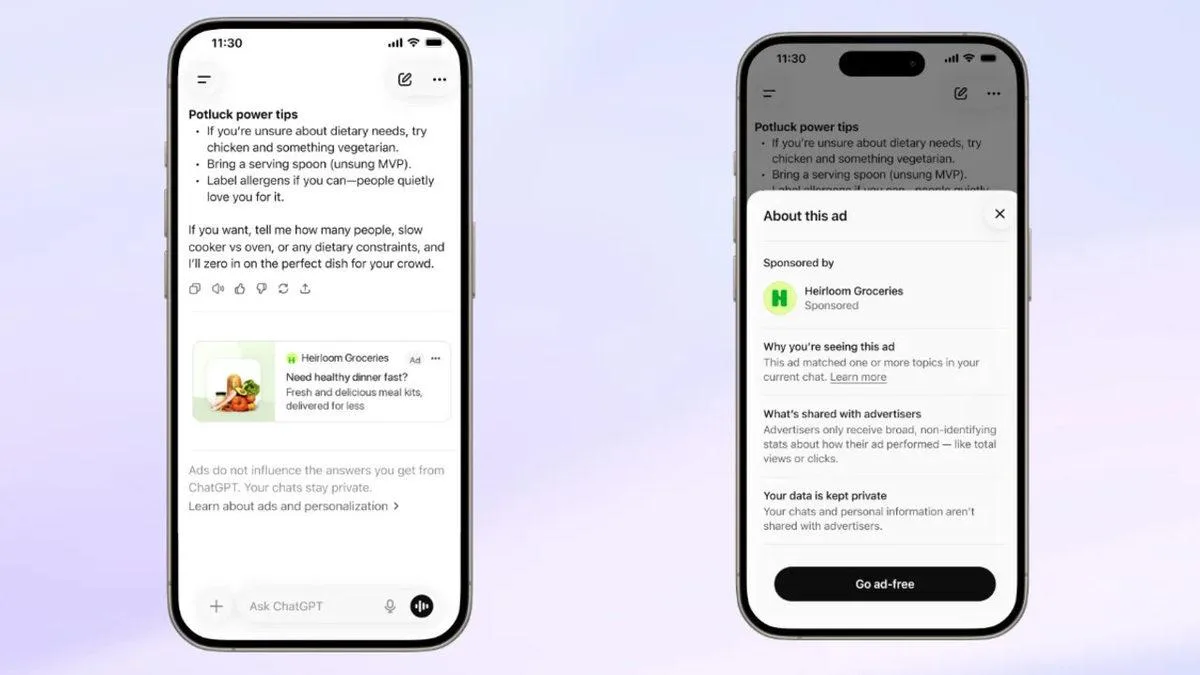
As it prepares for a potential IPO, OpenAI is focusing on revenue diversification and is turning that query volume into an advertising business. Sponsored product and service placements with visuals have been introduced in search results, and the company says user feedback has been positive.
Other platform metrics stand out too: voice mode has reached 250 million weekly uses, while image generation hit 1.5 billion weekly uses. With this move, OpenAI is bringing traditional search engine advertising right into the middle of a conversation — brands now appear on the very screen where users are looking for answers.






Comments (0)
No comments yet. Be the first!