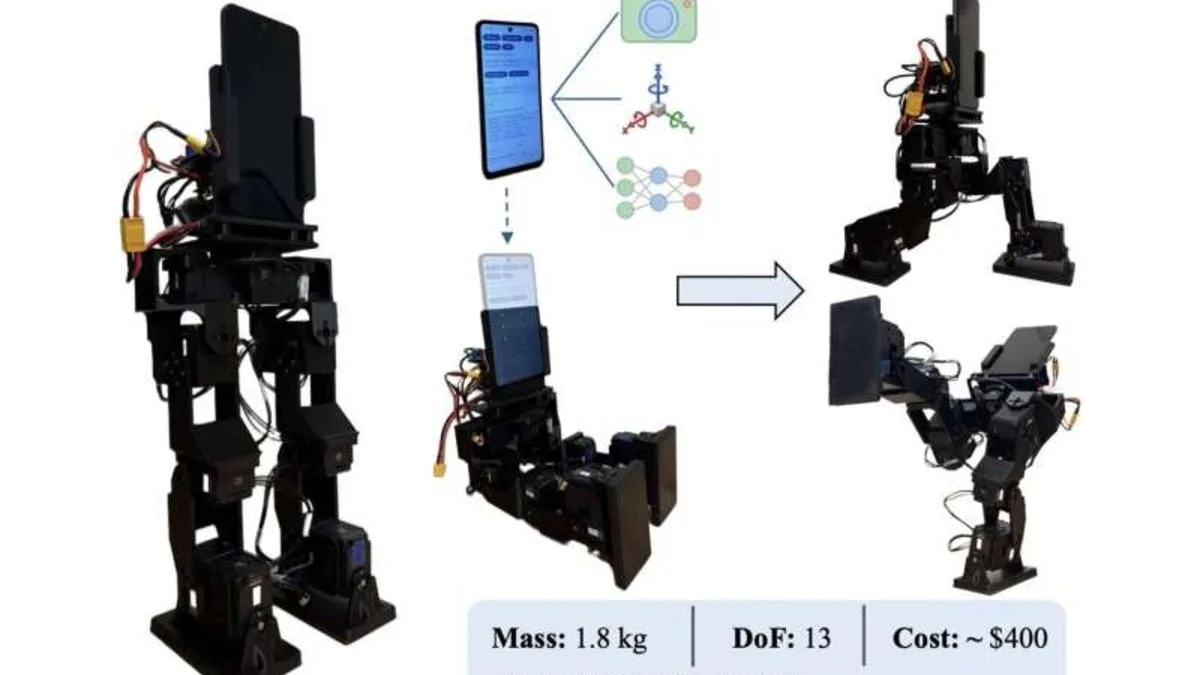

An old smartphone forgotten in a drawer can become the control center of a two-legged walking robot. PhoneBot, developed as an open-source project by UCLA researchers, makes building a humanoid robot possible without expensive lab equipment.
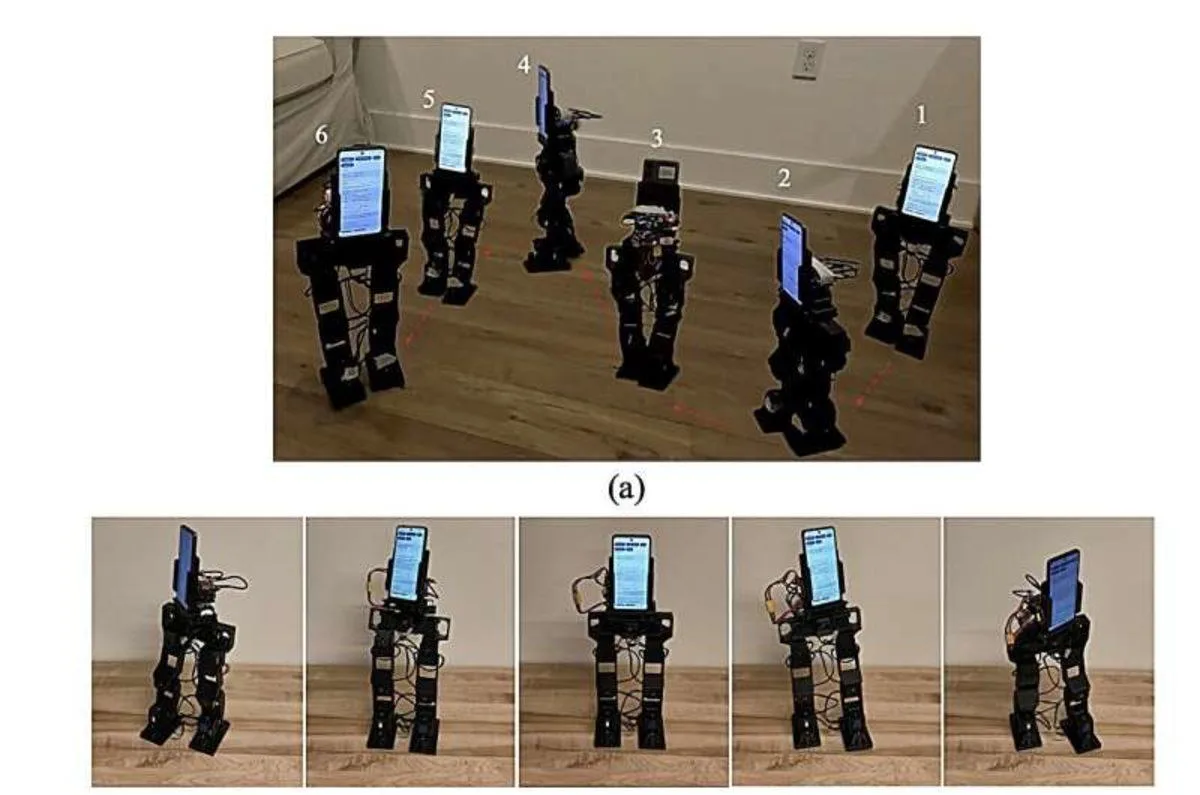
The system's brain isn't a new computer — it's an old phone. The phone's processor handles the computations, its camera sees the environment, and its sensors collect data. Motors and the mechanical structure do the rest. The result: a robot that can walk, follow people, and get back up when it falls.
Total hardware cost: $400
Humanoid robots typically require custom-made parts and big budgets. PhoneBot changes that picture. Built with 13 easily sourced servo motors, the system costs roughly $400 in total, excluding the phone.
That price, of course, doesn't deliver the capabilities of commercial humanoid robots. The goal is different: bringing robotics research and education to a wider audience. It offers an accessible starting point for anyone who wants to experiment and learn.
It can stand still and look around
PhoneBot weighs just 1.8 kilograms. Thanks to the 13 joints in its small body, it can turn its upper section and camera from side to side while its feet stay planted. No need to rotate its whole body to scan its surroundings.
That mobility matters for a bipedal robot. The system can stay in place and survey its environment.
Old phones are enough
No flagship required. Devices from 2017 and entry-level Android phones costing around $50 can run the system. The phone sends commands to the motors over Wi-Fi to control the robot.
It's a great example of repurposing old hardware: the phone you once used constantly is now a robot's control center.
It falls, gets up, and follows people
When PhoneBot falls face-down, it rights itself using its own mechanism. With its camera, it can detect and follow people.
Its microphone and AI features also enable voice communication. That makes PhoneBot more than a simple mechanical toy — it's a robot that can perceive its surroundings and manage its own movements. And at the center of it all is not expensive hardware, but an old smartphone.



Comments (0)
No comments yet. Be the first!