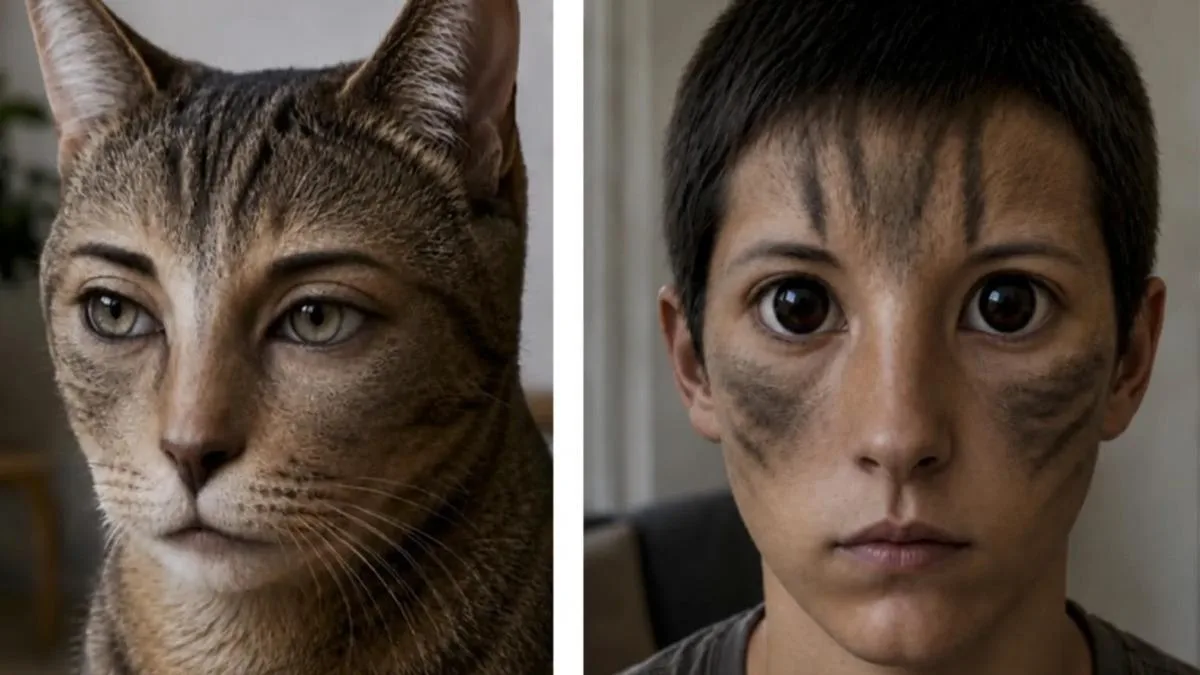

Luna, a gray tabby cat, now occupies strange territory in 28-year-old Karl's life. After brain surgery, Karl started seeing his cat's almond-shaped eyes, enlarged pupils or fur stripes in the faces of people he met.
The phenomenon runs both ways: if Karl starts the day seeing a normal human face, human features begin appearing on Luna's face instead.
Palinopsia and PMO behind it
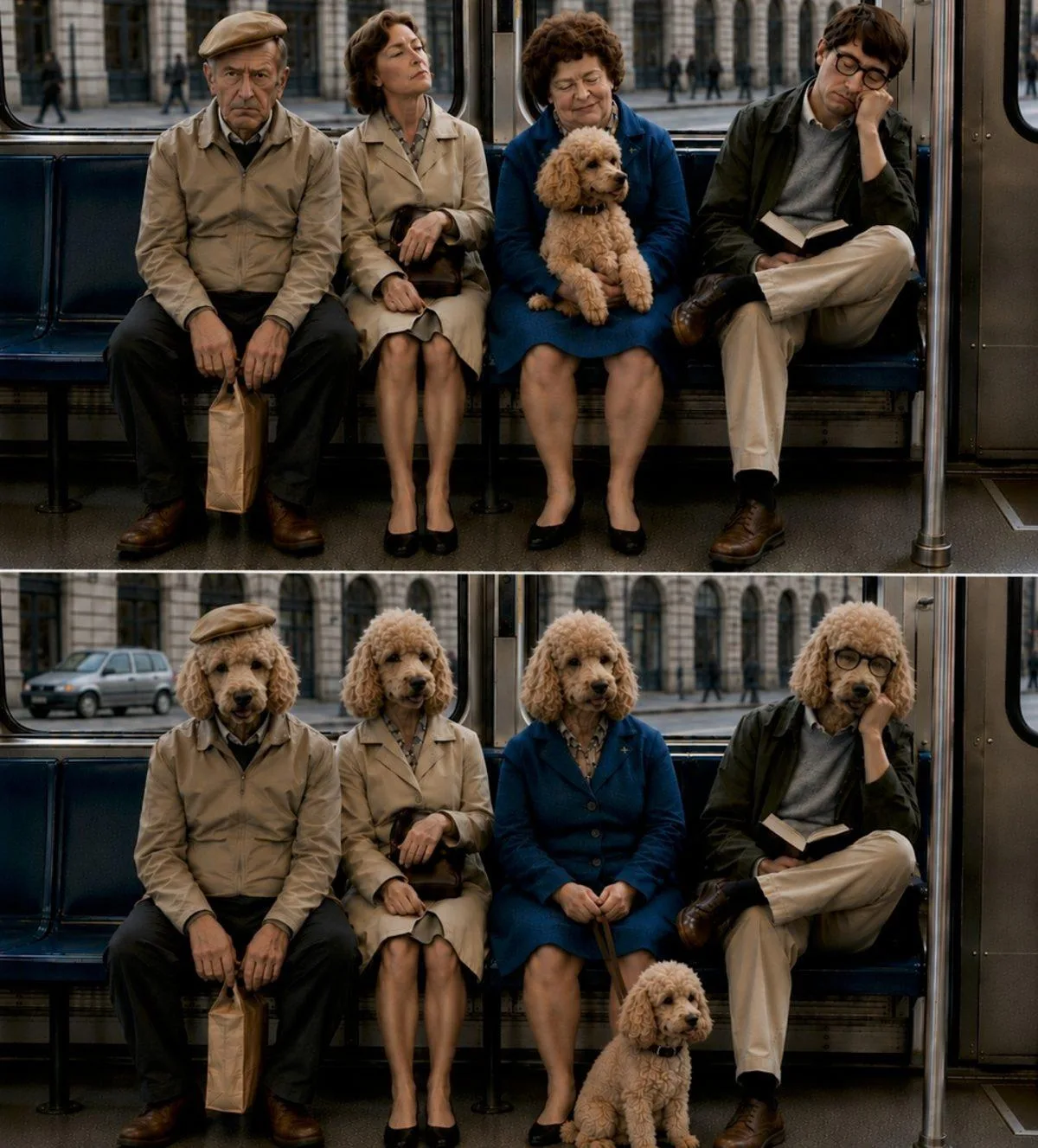
The case appeared in a report published in the journal Cortex in December 2026. It falls under a group of visual symptoms known in medical literature as "palinopsia" — per the Cleveland Clinic's definition, a condition in which disrupted visual processing in the brain makes a person keep seeing an image that is no longer in front of them. Triggers include migraines, epileptic seizures, stroke, certain prescription drugs and brain hemorrhages.
In Karl's case, palinopsia manifested as prosopometamorphopsia (PMO), colloquially known as "demon face syndrome." The rare disorder causes distorted, unsettling warping of faces. Two years ago, surgeons removed part of Karl's right temporal lobe to clear a tangle of vessels that risked fatal bleeding between an artery and veins. Partial removal of this region, key to face recognition and processing, permanently changed how Karl perceives faces.
Co-author of the study, cognitive neurologist Brad Duchaine of Dartmouth College, says the case proves how memory of individual features can be pulled into and shape current perception.
Karl's visions drawn with AI
To clarify what Karl sees, Duchaine first made a sketch, then fed it to a large language model (LLM) to make it more realistic. The resulting images were shown to Karl; the final images in the report were refined through collaboration between the two.
According to the neurologist, AI gives researchers a far more accurate way to visualize distorted visual perception. That also makes it easier for patients to explain how faces look to them — not only to doctors but to friends and family.
Duchaine's lab has contacted more than 250 people with similar face distortions, and one striking detail stands out: most patients were mistakenly assumed to have psychiatric problems and prescribed antipsychotic drugs. The team aims to use AI tools to track how Karl's condition changes over time and to explore how to support others with the same disorder.



Comments (0)
No comments yet. Be the first!