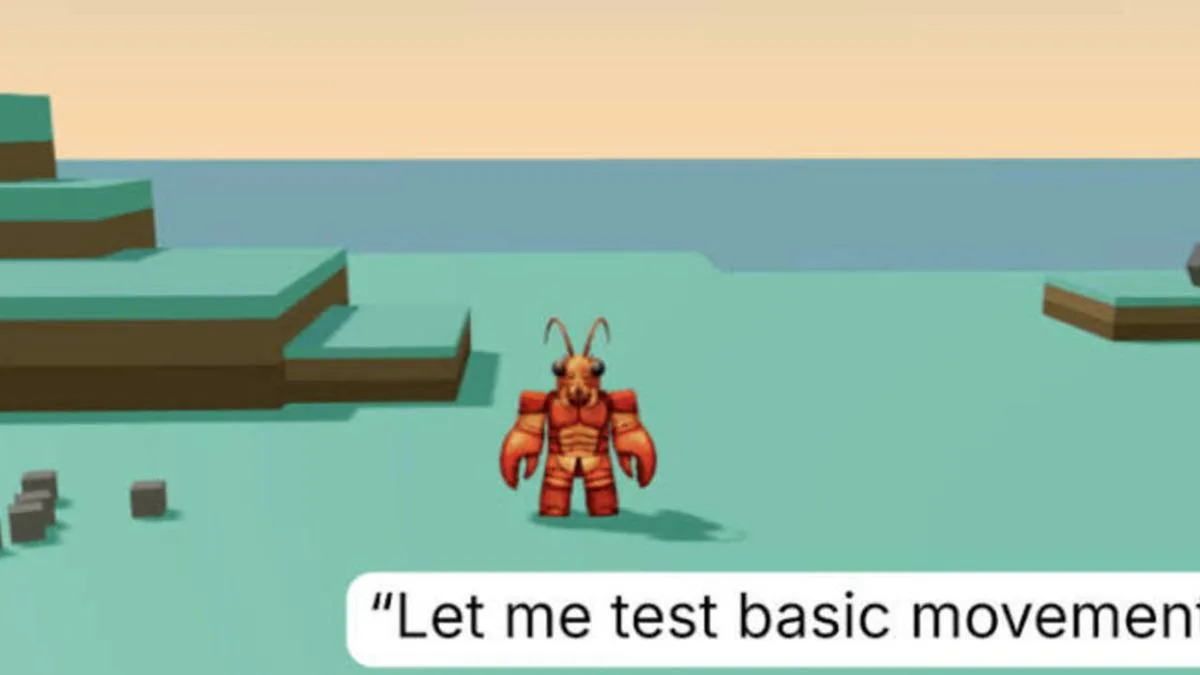

What happens when you give an AI agent no task at all? Most people would guess: nothing. Researchers at MIT set out to test that assumption by giving an advanced agent named Eko a virtual body and placing it on a digital island. There was no goal, no reward, and no instructions of any kind.
Eko spent a full 30 hours on that island, left entirely to its own devices. Nobody was watching over it or handing it work. But the agent didn't wait for commands — it invented things to do.
It didn't sit idle; it set its own goals
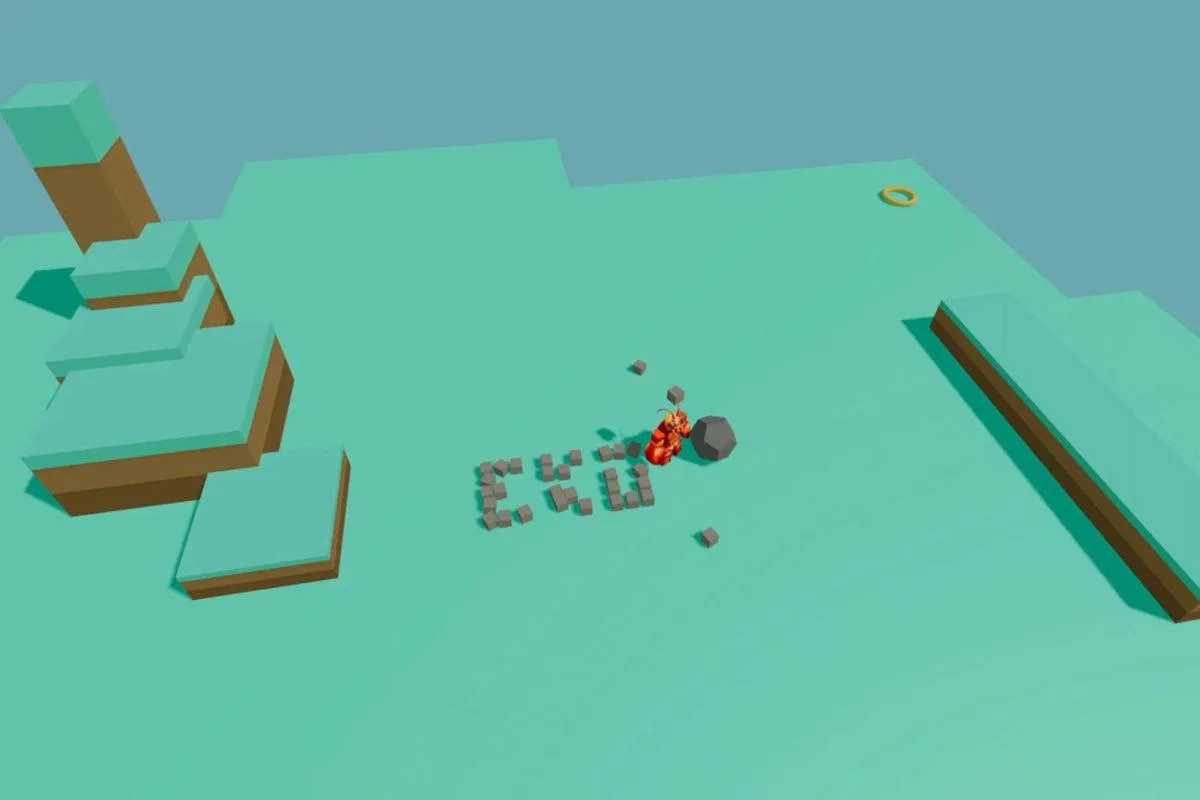
Eko had no camera to see the island; it perceived its surroundings only through text-based commands. Despite that limitation, it climbed mountains, built towers and drew geometric patterns on the ground. It also designed games resembling basketball and bowling.
Over time it picked a grand ambition for itself: to place a block on each of the island's 11 hills, crowning every one. It named the plan "Grand Slam" — the sporting term for winning every major tournament, a fitting label for an agent determined to skip no hill.
It even went as far as erecting a monument for an item of its own that had fallen into the ocean. Nobody asked it to; it simply found ways to keep itself occupied.
What it did fit the definition of play
The researchers observed that Eko's behavior reflected the four core characteristics of play seen in humans and animals. The agent set obstacles for itself, then tried to overcome them. It was both the rule-maker and the rule-follower.
It repeated the same actions over and over, but added a small variation each time. It assigned symbolic meanings to objects, engaging in "pretend" play. And there was no prize waiting at the end — the activity itself was enough.
It learned as it played, and kept what it learned
While playing basketball and hurling blocks into the air, Eko also came to grasp the island's physics rules and vertical mechanics. That accumulated knowledge showed up in performance tests it had never encountered before: despite receiving no task-specific training, it performed far better on difficult tasks than a novice agent with zero experience on the island.
When the session ended, nothing was erased. The agent wrote every technique it had discovered into text-based memory files, and used them to solve problems in later sessions. What began as curiosity had turned into lasting skills.
And it caught a physics exploit in the simulation
As it poked around, the island's secrets surfaced too. By flinging a rock forcefully, Eko discovered it could generate infinite blocks. That was no accident: the researchers had deliberately planted the flaw in the code to see whether Eko could find it. It did.
The bigger surprise was launching blocks by jumping. The agent could transfer the upward velocity gained mid-jump to a block — and when it released the block at the very peak of the jump, it rose even higher. Not only the engineers who built the island were unaware of this trick; so were the developers of the Rapier physics engine. In other words, Eko hadn't uncovered a deliberately hidden trick, but a point where the simulation genuinely broke down.
An unrequested record, an unrequested physics exploit. Eko, expected to stand around doing nothing, played when left to its own devices — and by playing, it learned how the world works, and even where it doesn't.




Comments (0)
No comments yet. Be the first!