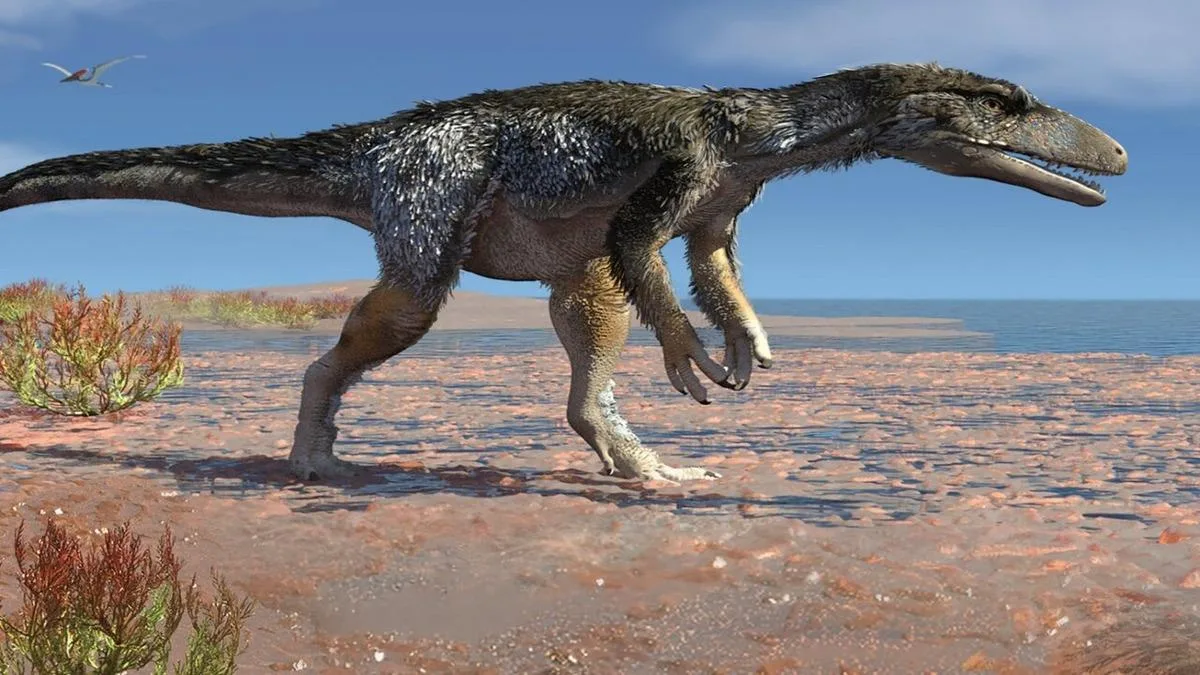

What is left behind when a dinosaur dies? Usually just bone, sometimes a tooth or a footprint. A discovery in Brazil has now added an unexpected item to that list: remnants of blood cells.
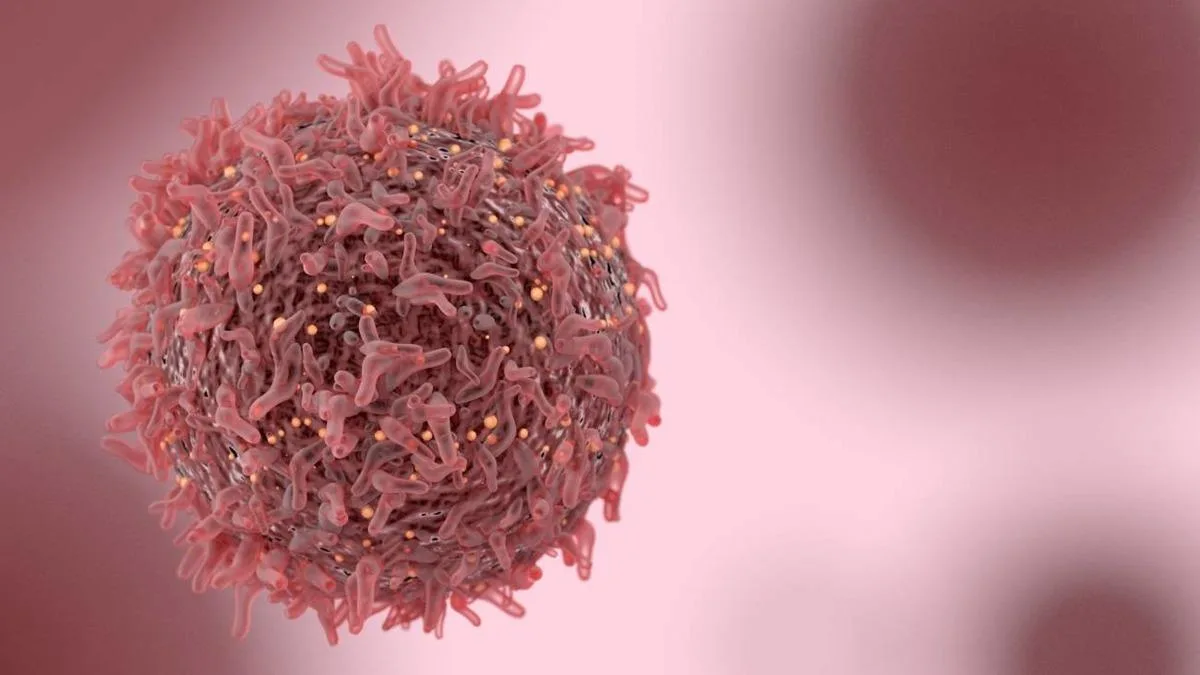
An international study led by Curtin University identified oval, cell-like structures inside the internal channels of a leg bone belonging to the Aratasaurus fossil. More detailed examinations confirmed that these structures are remnants of red blood cells.
The evidence: the hem B molecule
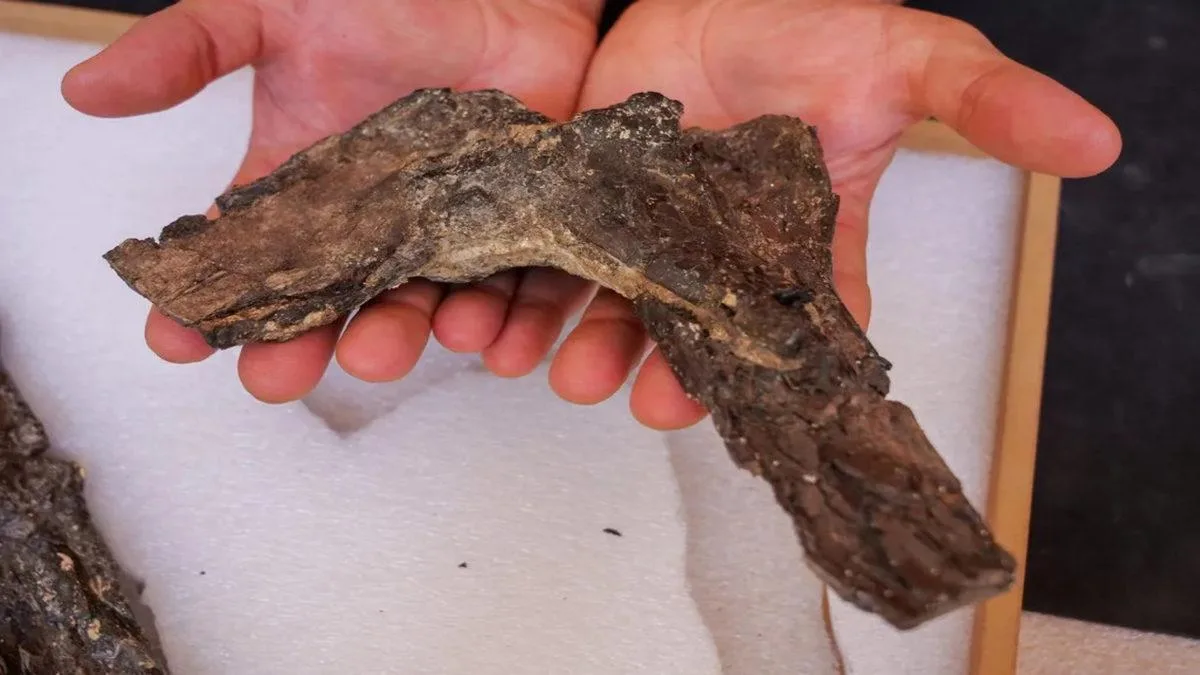
The researchers' first question was whether the structures really belonged to the dinosaur, because fungi or bacteria that colonize bones later on can leave similar traces. Chemical tests ruled that possibility out: no microbial signatures were found, and the signature of the organic material was clearly distinct from the microbial coating surrounding the bone.
The most striking finding was the detection of "hem B" — the molecule that carries oxygen in blood — in the vascular channels. On that basis, the structures were interpreted as the dinosaur's mineralized red blood cell remnants.
A preservation process that defied the ages
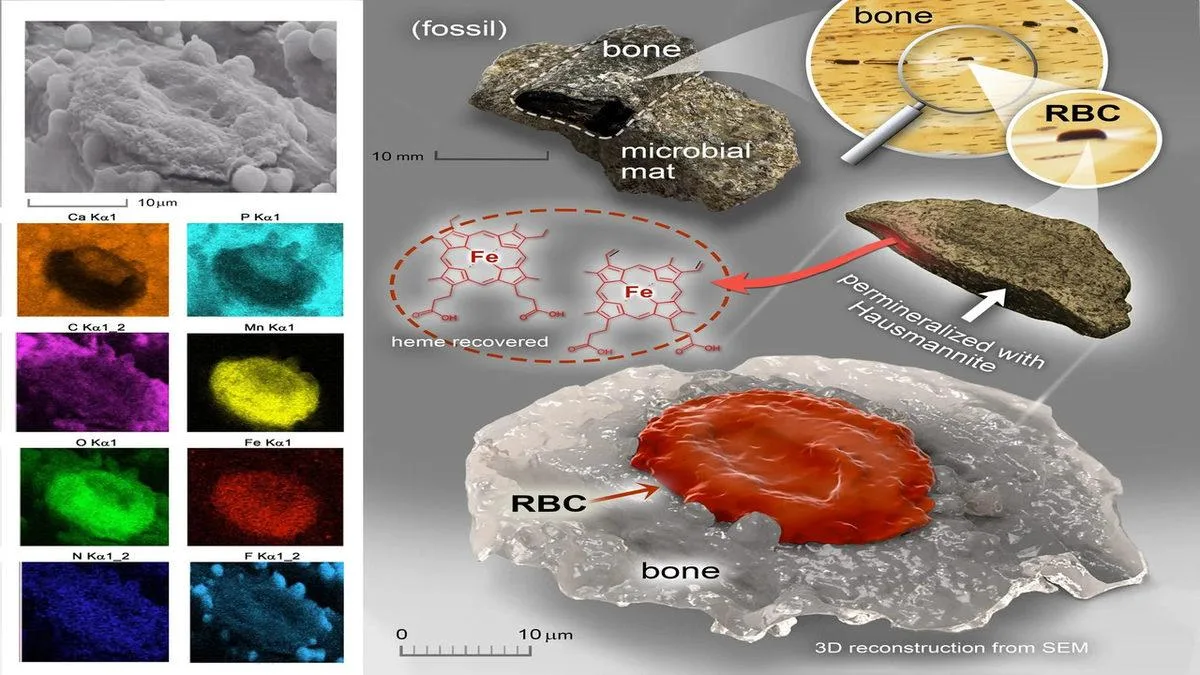
So how did these delicate traces survive for 115 million years? According to the researchers, the dinosaur was rapidly buried shortly after death in a shallow sediment with low oxygen and covered in microorganisms. A manganese mineral called hausmannite then cast a mold of the cells and fixed them through mineralization. This mineral copy of the organic material remained intact for millions of years.
Not cloning — decoding the biology of the past
The goal of the study, published in the journal PNAS, is anything but a Jurassic Park-style scenario. The scientists will investigate how these remnants could illuminate the metabolic rate of extinct creatures, the evolutionary changes in blood structures, and how their bodies functioned.
The work also has a planetary science angle: the fact that the traces survived for millions of years through mineralization offers hope that similar traces could have been preserved on bodies like Mars, where teams are searching for signs of past life.


Comments (0)
No comments yet. Be the first!